Home Blog Page 4

Looking Ahead in 2026

Diesel engines and amber lights have long characterized our industry. However, if you are a tow company owner looking to thrive in 2026 and beyond, you must accept a fundamental truth.  We are no longer just in the business of towing and recovery. We are in the business of compliance, technology, and customer experience.

The towing landscape is more complex and scrutinized than ever before. Success is now measured not just by response time, but by reputation, transparency, and strategic adaptation. The “wild west” era of towing is gone. The path to professional growth requires us to anticipate the challenges and embrace a future where ethical operations are not simply good practice, they are the only path to long-term profitability.

The primary challenge defining 2026 is the rising tide of local and state regulatory scrutiny. Fueling this is a widespread national conversation around “predatory towing,” leading to legislation that demands greater accountability.

As owners, we face new rules that frequently impose fee caps, require transparent pricing structures, and mandate predictable vehicle release hours, often including nights, weekends, and holidays. For some, these regulations feel like a direct assault on profitability. The professional owner, however, views compliance not as a burden, but as a path to better business and an ironclad reputation. Every proactive step we take to surpass the bare minimum legal requirement is an investment that insulates us from fines, lawsuits, and the devastating impact of negative public perception. Embracing strict internal standards for invoicing and communication is the first, non-negotiable step toward future proofing your operation.

In today’s fast-paced environment, the most efficient tow companies will win. This demands a stack of modern technology. GPS and telematics are no longer luxuries; they are essential for optimized routing, providing immediate and accurate ETAs to customers, and enabling you to monitor driver performance and efficiency in real-time. Crucially, a robust digital dispatch system or a customer-facing mobile app is necessary to meet the consumer demand for instant, real-time updates. If a customer must call for a status update, you are already behind. Streamlining this communication workflow between dispatch, driver, and customer elevates your service from a transactional necessity to a professional partnership.

The shift toward Electric Vehicles (EVs) and vehicles equipped with Advanced Driver-Assistance Systems (ADAS) represents a major operational challenge—but a powerful opportunity. These vehicles cannot be towed or recovered using yesterday’s methods. EVs require specialized equipment to protect high-voltage battery packs, and improper towing can brick the entire vehicle. ADAS-equipped cars are full of delicate sensors and cameras that can be thrown out of calibration, leading to costly repairs.

The owner who invests in specialized training (like WreckMaster, ERSCA or TRAA certifications for EV/ADAS towing) and acquires certified, purpose-built equipment is positioned to specialize and charge a premium. This high-skill, low-risk segment of the market, towing a Tesla or a modern heavy-duty truck, offers significantly higher margins and fewer regulatory headaches than standard roadside calls. Futureproofing your fleet means investing in training now to dominate this segment later.

The perennial industry issue of the driver shortage continues to plague us. The simple solution of offering slightly higher wages is often unsustainable. Sustainable talent retention requires a comprehensive approach built on professionalism. Provide your driver development and well-maintained equipment, invest in their professional development, and foster a culture of safety and respect. When drivers feel valued, equipped, and respected by management, you reduce turnover, which is one of the single greatest operational costs a tow company faces.

We must acknowledge that the towing industry carries a negative reputation in many public sectors. For the owner, customer service is the ultimate differentiator. This starts with radical transparency. Clear, detailed invoicing, prominently posted rates, and thoroughly explaining potential charges before the tow begins will disarm skeptical customers and eliminate disputes over “surprise fees.” A professional interaction ensures that a customer’s worst day (a breakdown) does not turn into an adversarial encounter with your business.

Relying heavily on low-margin motor club calls is a recipe for financial instability. The smart owner strategically diversifies revenue through high-value contracts:

  1. Heavy-Duty and Specialized Towing: While demanding significant capital investment, this segment offers the highest margins and is less sensitive to market fluctuations.
  2. Municipal and Law Enforcement Contracts: Securing these requires impeccable compliance, consistent performance, and building strong, ethical relationships with local authorities.
  3. Private Property Management (PPM): This is a reliable revenue source, but owners must be vigilant. Ensure all property signage is perfectly compliant with local and state laws. A single violation can compromise the entire contract and reputation.

In the 2026 digital age, your company’s online reviews are your most valuable asset. They are the new word-of-mouth. Owners must be proactive: train drivers and dispatchers to encourage satisfied customers to leave reviews, and have a calm, professional strategy for responding to negative feedback. A graceful response to a one-star review, offering a clear path to service recovery, often speaks louder about your company’s character than a dozen five-star ratings.

The future belongs to the towing companies that embrace the professionalization of the industry. Success in 2026 and beyond is no longer about having the biggest truck; it is about having the smartest strategy.

This requires an investment mindset—calculated spending on certified training, advanced telematics, and specialized equipment for new-age vehicles. By prioritizing transparency, strategic specialization, and ethical business practices, tow company owners can not only weather the regulatory changes but also elevate their businesses into respected, high-margin, and essential service partners for the modern road. We have an opportunity to lead this industry out of its historical shadow. Let’s take it!

New JD35/40 Ton Rotator from Jerr-Dan® Expands Heavy-Duty Recovery Options

For Handling Diverse Challenges in Towing & Recovery Operations

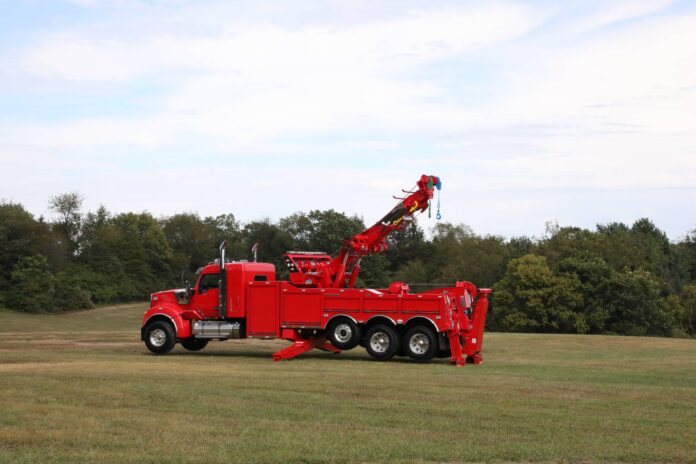
Hagerstown, MD (October 17, 2025) — Jerr-Dan, an Oshkosh Corporation company and leading manufacturer of towing and recovery equipment, introduces its new JD35/40 Ton Rotator, designed to bridge the gap between existing heavy-duty recovery equipment by combining proven technologies with new operator-focused updates.

“The introduction of the 35/40 Ton Rotator from Jerr-Dan® addresses evolving weight and performance expectations in the recovery sector,” says Bob Nelson, Vice President and General Manager, Jerr-Dan. “Updates such as lighter-weight winches, a tip alarm that activates at one degree of unevenness and the simplified hydraulic swivel for ease of service reflect industry trends toward operator safety and serviceability.”

Subframe and Outrigger Design

The foundation of the new rotator is a 7.4-million RBM high-strength torsion subframe paired with the S130 outrigger system technology developed for the existing JD50/60 Ton Rotator from Jerr-Dan. This combination is designed to provide enhanced stability, particularly during side and rear recoveries.

The outrigger legs use pivoting, ground-compacting spade feet, while the rear of the platform incorporates multi-position, multi-direction spades to handle uneven terrain and high-load situations.

Boom Reach and Rotation

The JD35/40 Ton Rotator is equipped with a 37-ft boom that operates with continuous 360-degree rotation. This configuration expands the working range and supports varied recovery angles. The operational load chart provides clarity on performance limits across the working envelope, which helps operators make informed decisions in the field.

Winches and Recovery Capability

Standard equipment includes two 35,000-lb planetary two-speed winches, with optional 15,000-lb auxiliary winches available. A 50,000-lb planetary 2-speed drag winch is included as standard, supporting demanding recovery work.

The rotator also features audible alarms for boom rotation and platform leveling, designed to provide immediate operator feedback and enhance site safety.

Underlift Compatibility

To maximize towing flexibility, the new model supports all 500 Series underlift options used on Jerr-Dan’s larger 50- and 60-ton wreckers. These include the new Low Profile UL500LP and the UL565 coach boom, extending the range of vehicles that can be handled.

Hydraulic and Electrical Systems

The hydraulic system uses a single high-flow pump to power a distributed valve layout, simplifying hose routing and improving serviceability. Controls include fully proportional electrohydraulic paddles and a wireless belly pack remote, consistent with other heavy-duty models manufactured and sold by Jerr-Dan.

For electrical systems, the CAN-Bus architecture distributes control and diagnostic points across three separate fuse panels. This approach reduces troubleshooting time and improves service access.

Body and Storage

The rotator is available in a tri-axle configuration with multiple tunnel size options. Like other Jerr-Dan JFB bodies, it is constructed from copolymer polypropylene and comes standard with roll-up doors and has a limited lifetime warranty on the body and doors. Storage is designed for flexibility, with optional “gold level” solutions for rigging and accessories, including Jerr-Dan’s new 42,000-lb capacity spreader bar attachment.

A New Option for Heavy-Duty Fleets

“The new JD35/40 Ton Rotator provides a new option between traditional heavy wreckers and the largest rotators on the market,” concludes Nelson. “It combines strength and reach with operator-friendly systems, positioning it as a flexible addition to fleets that need to handle diverse recovery and towing challenges.”

To learn more about Jerr-Dan products and services, visit www.jerrdan.com.

Follow us on social media at:

To find your local authorized Jerr-Dan Distributor, visit our website here: www.jerrdan.com/distributor-search.

About Jerr-Dan

JerrDan, LLC, an Oshkosh Corporation [NYSE: OSK] company, is a leading manufacturer of towing and recovery equipment and offers an extensive range of light, medium and heavy-duty carriers, wreckers and rotators. The company is headquartered in Hagerstown, MD, and its products are backed by industry-leading warranties and a strong service network dedicated to the towing professional. To learn more about Jerr-Dan, visit www.jerrdan.com.

About Oshkosh Corporation

At Oshkosh (NYSE: OSK), we make innovative, purpose-built vehicles and equipment to help everyday heroes advance communities around the world. Headquartered in Wisconsin, Oshkosh Corporation employs over 18,000 team members worldwide, all united behind a common purpose: to make a difference in people’s lives. Oshkosh products can be found in more than 150 countries under the brands of JLG®, Pierce®, MAXIMETAL, Oshkosh® S-Series™, McNeilus®, IMT®, Jerr-Dan®, Frontline™ Communications, Oshkosh® Airport Products, Oshkosh AeroTech™, Oshkosh® Defense and Pratt Miller. For more information, visit oshkoshcorp.com.

®, ™ All brand names referred to in this news release are trademarks of Oshkosh Corporation or its subsidiary companies.

Forward Looking Statements

This news release contains statements that the Company believes to be “forward-looking statements” within the meaning of the Private Securities Litigation Reform Act of 1995. All statements other than statements of historical fact, including, without limitation, statements regarding the Company’s future financial position, business strategy, targets, projected sales, costs, earnings, capital expenditures, debt levels and cash flows, and plans and objectives of management for future operations, are forward-looking statements. When used in this news release, words such as “may,” “will,” “expect,” “intend,” “estimate,” “anticipate,” “believe,” “should,” “project” or “plan” or the negative thereof or variations thereon or similar terminology

are generally intended to identify forward-looking statements. These forward-looking statements are not guarantees of future performance and are subject to risks, uncertainties, assumptions and other factors, some of which are beyond the Company’s control, which could cause actual results to differ materially from those expressed or implied by such forward-looking statements. These factors include the overall impact of the COVID-19 pandemic on the Company’s business, results of operations and financial condition; the duration and severity of the COVID-19 pandemic; actions that may be taken by governmental authorities and others to address or otherwise mitigate the impact of the COVID-19 pandemic; the negative impacts of the COVID-19 pandemic on global economies and the Company’s customers, suppliers and employees; and the cyclical nature of the Company’s Access Equipment, Commercial and Fire & Emergency markets, which are particularly impacted by the strength of U.S. and European economies and construction seasons.

Doing It Right: Partnering with the Florida Highway Patrol, Guardian Fleet and Tow Professional Magazine to Promote Safer Vehicle Securement

By Jason Giddens, JB Tow Truck Accessories

In the towing industry, safety and professionalism go hand in hand. I’ve always believed that if you’re going to do something, do it the right way — the safest way. That mindset is what led me to recently partner with the Florida Highway Patrol (FHP) to create a series of educational videos focused on one of the most important parts of towing: vehicle securement.

Why I Wanted to Do It

For years, I’ve heard a lot of different answers when asking operators what “legally secured” really means. Everyone had their own opinion — and most of them didn’t match. As someone who’s always taken pride in doing things by the book, that inconsistency bothered me. I wanted real, accurate answers from the people who enforce the laws.

After about six months of reaching out and asking around, I finally connected with Sergeant Meredith from the Florida Highway Patrol. She immediately saw the value in what I was trying to do and helped line up everything we needed to make it happen.

Filming and Education

This couldn’t be a cheaply done iphone or Android video, it had to be quality. I had talked with Darian Weaver, owner of Tow Professional at shows in the past. I recognized his love for family, passion for industry, and his desire to promote safety was much like my own. I contacted Tow Professional and Darian jumped at the chance to bring his film crew 9 hrs. down to Springhill, Fl to capture this on video. Chuck Camp or Video producer filmed Guardian Fleet Services in Spring Hill, Florida, and I can’t thank them enough for their support. They provided two trucks, an excellent facility, and two fantastic, experienced operators who helped us bring these videos to life. Their professionalism and teamwork made the filming process smooth and educational for everyone involved.

Together with FHP, we went over how to properly secure vehicles to tow trucks — what’s legal, what’s not, and what the fines and penalties can be when it’s done wrong. Improper securement can result in fines over $100 per infraction, and in more serious cases, a truck can even be placed out of service until corrected.

The most common problems I see out in the field are worn-out equipment, not enough straps, or no straps at all. These mistakes don’t just risk a ticket — they risk lives, property, and a company’s reputation. I was honestly blown away by how little securement is technically required by law. In my opinion, even what’s considered standard under the law isn’t enough. The legal minimum and the safe standard aren’t always the same, and as professionals, we should always aim higher than the bare minimum.

The Message

My message to every operator is simple: do it right. When you secure a vehicle properly, you keep everyone safer, reduce your company’s liability, and show customers and law enforcement that you take your job seriously. It builds pride, trust, and professionalism across our entire industry.

These videos weren’t made to criticize anyone. They were made to educate, inform, and unite. The more we know, the safer we all become — and that’s something worth towing for.

About the Author:

Jason Giddens is co-founder of JB Tow Truck Accessories in Tampa, Florida — home of the American-made Big Stiffy lockout tool, Fat Boy wheel-lift adapters, and other professional-grade towing products. Learn more at jbtow.com.

Collin’s Dollies Tunnel Boxes

Collins has long provided super high quality, premium, custom built Tunnel Boxes for the towing industry.  Collins Tunnel Boxes come with steel or aluminum construction and weatherproof, flush-mounted doors.  Optionally, polished aluminum diamond plate and stainless-steel trims are available.  Contact us at sales@collinsdollies.com and we’ll work together to build you the perfect tunnel boxes for your truck.

Big D’s Fabrication Heavy-duty Tow Dollies, the right tools to get the job done

Big D’s Fabrication is a Wisconsin-based manufacturer specializing in heavy-duty towing equipment that is designed and “Made for TOWER’S by TOWER’S” for the towing and recovery industry. Located in Green Bay, WI the company crafts custom-engineered truck dollies and accessories tailored to meet the demanding needs of tow operators. Big D’s Fabrication offers a range of dollies with varying load capacities.

Our largest dolly is the 44,000lb dolly and this dolly will hold both tandems. We’ve been asked to develop this dolly so that it can be used on garbage trucks, quad axles, loaded trailers for distance, and other things that need a larger capacity. We did our testing with a rotator weighing 44,300lbs on the tandems and provided a scale ticket (in the pictures).

Big D’s Fabrication dolly sizes are:

  • 44K Dolly: 44,000 lbs. capacity
  • 40K Dolly: 40,000 lbs. capacity
  • 25K Truck Dolly: 25,000 lbs. capacity
  • 25K Camper Dolly: 25,000 lbs. capacity

Each dolly features either a double or single pan design, depending on the model, and is engineered to raise the load height by 5 inches. Big D’s Fabrication dollies are designed for versatility, allowing for use both right side up and upside down, depending on the height requirements of the job.

The heavy-duty dollies are also easily transportable by towing behind your vehicle.  We offer several accessories…lifting sling/harness, bus fork brackets (attach to the dolly) and dolly fork pins, for ease of moving the heavy-duty dollies around. All dollies can be painted any PPG-AUE370 color.

For more information contact Big D’s Fabrication on their website at www.bigdsfabrication and check out their Facebook page at facebook.com/bigdsfab for working pictures.

Our newest release is the availability of aluminum and stainless-steel sheaves for synthetic winch lines.  Contact Big D’s Fabrication for available sizes or to get the specific size for your application.

The Human Side of Towing

Family, Legacy, and Life on Call

A Legacy on the Line

In the towing industry, trucks are not just tools of the trade. They are symbols of sacrifice, perseverance, and family pride. For many operators across the country, towing is not simply a career choice; it is a legacy. Multi-generation tow companies are woven into the fabric of their communities, built by parents and grandparents who answered the call, rain or shine, day, or night.

These family businesses represent decades of commitment. The first generation laid the foundation, often starting with a single truck and a lot of grit. The second generation grew up in the passenger seat, learning not just how to run a winch or hook a truck, but how to run a business. And now, in many shops, a third generation is stepping forward ready to bring fresh ideas, embrace innovative technologies, and adapt to a changing industry.

Still, what carries through the years is more than trucks and contracts. It is the family name, the reputation built on honesty, reliability, and community trust. Each call answered adds another chapter to the story, and every generation feels the weight of carrying that story forward.

The Balancing Act: Work and Family in a 24/7 Industry

Unlike many professions, towing does not fit neatly into a 9-to-5 schedule. The work is unpredictable, demanding, and relentless. Being “on call” means exactly that- you are never off duty. A midnight call can interrupt more than just sleep; a holiday meal can go cold while the truck warms up. Children of towers grow up learning that Dad, Mom, or both may miss the school concert because someone on the roadside needs help.

But what looks like disruption from the outside becomes a rhythm for families in towing. Kids ride along in the truck, learning about hard work and service firsthand. Spouses become partners in business, managing dispatch, handling billing, or keeping the home front running when the phone rings. Many towers will tell you their children did not just grow up around the business- they grew up in it.

The constant balancing act teaches resilience. Families find ways to celebrate milestones between calls, to take pride in the work that pulls them away, and to turn the challenges of a non-stop business into lessons about sacrifice and commitment.

Stories That Inspire

Every towing family has its story, and you’ve read many. For some, it is about passing down the first truck from one generation to the next- still running, still a reminder of humble beginnings. For others, it is about daughters stepping into leadership, modernizing fleets, or taking the driver’s seat in an industry long seen as male dominated. And for many, it is about weathering storms together, from economic downturns to tragedies on the roadside.

These stories highlight the strength of family bonds and the unique culture of towing. They remind us that behind every truck that rolls out is a family who worked late, sacrificed sleep, and pulled together to keep the wheels turning.

Looking Ahead: The Future of Family in Towing

The towing industry faces challenges- from non-payment issues to rising costs and the demands of new vehicle technology. But the strength of multi-generation families offers hope for the future. Each new generation carries not only the knowledge of those who came before but also the creativity to navigate what is ahead.

With that comes responsibility. Our industry must safeguard its future for the next generation and that means doing what is right, even when it is not easy. If we do not hold ourselves accountable, outside regulation will do it for us. Predatory towing and price gouging cast a shadow on everyone in this business, threatening the reputation of hardworking, ethical operators. We can no longer turn a blind eye. When another company operates outside the law, it damages us all. Instead of ignoring it, we must rally together and demand that every tower runs a legal, transparent operation.

And just as importantly, we must stop undercutting one another. Competing on razor-thin pricing may win a short-term contract, but it weakens the industry as a whole. A fair, sustainable pricing structure allows every company- large or small, first-generation or fourth- to remain profitable and strong. By standing together, running clean businesses, and upholding fair practices, we protect our livelihoods, preserve our legacies, and ensure that future generations inherit an industry they can be proud of.

As younger family members step into the business, they bring energy, digital savvy, and new ideas about customer service and efficiency. At the same time, they hold on to the lessons of grit, reliability, and service that were instilled by the generations before them. That combination ensures the legacy of family towing companies won’t just survive but it will thrive. However, the towing industry is at a turning point as major corporations continue to buy out smaller, independent companies. What was once a landscape defined by local, family-run businesses is now shifting toward large-scale operations with regional reach. This consolidation reflects a broader business trend where efficiency, uniformity, and advanced technology drive decision-making. For some, these mergers offer stability, better equipment, and growth opportunities. But for others, they raise concerns about the loss of local identity, personalized service, and the entrepreneurial spirit that built the industry. As corporate ownership expands, the heart of towing- the relationships, the reputation, and the community trust will become the key differentiator. The future may belong to those who find a balance between big-business resources and the genuine human touch that customers still value most.

Conclusion: The Heart of the Industry

Towing is more than trucks and recoveries. It is about people- families who keep answering the call no matter the hour, no matter the weather, no matter the sacrifice. It is about legacies built on service and dedication.

Behind every tow truck on the road is a story worth telling- a story of family, legacy, and life on call.  I would love to write that story!  My email had to change and I lost everything.  Please reach back out to me at michellesukow@gmail.com- I’d love to write your story, your legacy.

New Air Hammer Powered Hub Puller Cuts Wheel Hub Removal Time by up to 80%

PITTSBURGH, PA — [August 7, 2025] — Professional technicians now have a faster, cleaner solution for seized wheel hub removal with the release of the new Air Hammer-Powered Tommy 475 Wheel Hub Puller (PMXTOM475PRO). Designed to save time with no more control arm teardowns, this innovative puller pairs seamlessly with the AirStrike™ Bi-Directional Air Hammer (3,000 BPM) to deliver high-performance extractions in as fast as 30 seconds. The Tommy 475 is also compatible with the previously available LT855AH Bi-Directional Air Hammer.

Engineered for pros who do not have time to waste, this tool eliminates the need for hammers, torches, and risky pry bars. With a machined flat flange that mounts directly to the hub, the puller delivers straight, centered force—preventing damage to the spindle, knuckle, or CV joint. The tool’s rugged construction includes a heat-treated, forged 5/8″-18 center bolt built for real-world abuse.

The puller flange easily attaches to 3-3/4″ to 4-1/2″ bolt patterns. It is a universal solution compatible with most domestic and import ½-ton vehicles with 4–6 lug studs. Setup takes less than five minutes, and once mounted, the hub is free in less than half a minute.

“This tool is designed to solve a real-world shop problem—wasting time and risking damage every time a hub won’t budge,” said Milton Specialty Tool Group General Manager Jeff Del Rossa. “By combining the hub flange and shaft with the bi-directional air hammer, you’re pulling hubs straight off in seconds—no drama, no downtime.”


For more information on the new Tommy 475 Wheel Hub Puller, as well as other ProMAXX Tool products, please visit promaxxtool.com. Questions? Call an experienced tool specialist at 724-941-0941 and e-mail inquiries to info@promaxxtool.com.

Power in Unity: 500,000-Pound Dragline Recovery in Florida

On July 17, 2025, a high-stakes recovery operation unfolded in Florida, when a 500,000-pound dragline slipped off its loading shelf inside an active mining facility. The sheer size and weight of the equipment meant this was not just another job—it was a potential environmental and operational disaster.

The Call That Started It All

The call first came into Dennis’s Garage in Jasper, Florida. Brice Dennis quickly realized this was not a one-rotator recovery. One of the massive crawler tracks had dropped off the edge of the loading shelf, leaving the dragline teetering dangerously. Recognizing the magnitude of the situation, Dennis reached out to longtime friend and trusted industry veteran, Kevin Goodyear of Goodyear Towing & Recovery, operating out of the western Florida Panhandle.

Together, they formulated a plan that would span hundreds of miles and pull together some of the heaviest equipment in the industry.

Assembling the Dream Team

Within hours, the site transformed into a coordination hub of recovery experts. Dennis’s Garage deployed two Century 1150 rotators, while Goodyear Towing answered the call with a Century 1075 rotator, two dedicated winch boxes, and a fully stocked rigging box. The scene continued to build as additional reinforcements arrived:

  • A Century 9055 from Parkway Wrecker in Tallahassee, FL
  • Another Century 9055 from Tri County Towing in Chiefland, FL
  • A Century 5130 brought in to supplement winching and anchoring
  • And two D8 dozers, critical for repositioning and stabilization

With a total of 36 lines rigged to the dragline’s structure and tracks, the operation resembled a spider web of tensioned steel—each line precisely placed and calculated to distribute the immense weight.

18 Hours of Precision and Grit

Under the weight of pressure—literally and figuratively—this elite team of towers, operators, and dozer drivers spent 18 continuous hours executing the recovery. Day turned into night, and the scene lit up under work lights, revealing the tension, coordination, and power in play.

Each recovery unit was choreographed like a symphony—line pulls, coordinated lifts, tension releases, and slight track nudges were all timed to precision. And in the end, it worked.

The dragline was successfully recovered without structural damage, and—most critically—an environmental disaster was avoided.

A Testament to the Industry

This operation stands as a shining example of what can be accomplished when true professionals unite under a shared mission. Rival companies became allies. State lines disappeared. Ego took a backseat to teamwork.

In an era where cooperation sometimes feels rare, this recovery reminds us all of what the towing and recovery industry represents: grit, skill, and unity under pressure.

They weren’t just lifting steel. They were lifting the entire industry together—one inch at a time.”

Faster Response, Safer Roads: Motorola WAVE Push-to-Talk for Towing Professionals

In the towing and recovery business, every second counts. Whether you’re responding to a stranded driver on a busy interstate, coordinating a multi-vehicle accident recovery, or managing dispatch across multiple regions, clear and instant communication is your lifeline. That’s where Motorola WAVE Push-to-Talk (PTT) comes in—a nationwide communication solution that keeps your entire team connected, no matter where the road takes them.

The Challenge for Towing Operations

Traditional two-way radios are powerful tools for local communication, but when your drivers are spread across cities, counties, or even state lines, staying in touch can become a challenge. Cell phones may offer coverage, but dialing, waiting for connections, and the risk of distracted driving slow your response time.

The result? Missed calls, miscommunication, and delayed service—all of which can impact customer satisfaction and your bottom line.

The WAVE Advantage

Motorola WAVE Push-to-Talk eliminates those barriers by giving you instant, secure, and reliable communication over any broadband network—4G LTE, 5G, or Wi-Fi. This means your tow truck operators, dispatchers, and supervisors can talk in real-time across the entire country with just the push of a button.

Key Benefits for the Towing Industry:

  • Nationwide Coverage: Stay connected with your fleet no matter where the job takes you—across the city or across state lines.
  • Instant Push-to-Talk: Communicate in real time without dialing or waiting for a connection.
  • Group and Private Calls: Reach the whole fleet instantly or speak privately with one driver.
  • GPS Location Tracking: Monitor vehicle locations to send the closest truck to a call, reducing response times and fuel costs.
  • Safe and Simple to Use: Dedicated PTT devices like the WAVE TLK 110 or TLK 150 are designed for one-touch operation, minimizing driver distraction.
  • Scalable: Add or remove users as your business needs change—no complex infrastructure required.

Real-World Impact

Imagine your dispatcher instantly alerting every driver about a multi-vehicle accident blocking a major route—before they get stuck in traffic. Or being able to locate the nearest available truck to assist a stranded customer, even if they’re two counties away. With WAVE, you’re not just improving communication—you’re improving efficiency, safety, and customer service.

Easy Deployment, Immediate Results

Motorola WAVE doesn’t require towers, repeaters, or complicated installations. Your team can be up and running in hours, not weeks. Devices can even be paired with your existing two-way radios for a seamless transition.

Whether you operate a single truck or a multi-state towing fleet, WAVE gives you the speed, coverage, and control you need to keep your business running smoothly—and your customers coming back.

In the towing world, fast communication isn’t a luxury—it’s a necessity. With Motorola WAVE, you can connect your team instantly, work more efficiently, and respond faster—anywhere the job takes you.

Learn more about Motorola WAVE for the towing industry at www.pttanywhere.com or call (800) 226-7470.

Beyond the Hook: When Hyper-Focus Becomes a Blind Spot

I’ll admit it….. I am a list-maker, reminder-setter, and planner junkie. If there is a system to keep me on track, I have probably tried it! When I could not find one that I liked- I made my own. I like my ducks in a row, color-coded, and marching in order. And yes, I love being laser-focused on a task. But here’s the kicker: when I get hyper-focused, things slip. Not the small stuff either- the important things. Think about edit deadlines. (And no, I’m not saying I missed one… but I’m not saying I didn’t either.)

Take my most recent example: I have been working on an edit for a mentor I admire. I have been obsessing over getting it “just right.” Guess what I wasn’t paying attention to? The actual deadline. And now, here we are, and my edit is due tomorrow. I am still wrestling with what I want to write but the situation basically picked my next edit topic for me. Lesson learned: being hyper-focused isn’t always the flex we think it is.

And if you work in towing, you already know this truth better than most.

Recovery Reality Check

On the side of the road, hyper-focus can feel heroic. You’ve got a tractor-trailer on its side, traffic piling up, and everyone is watching your every move. You dial in so hard on the recovery (chains, rigging, angles) that you do not notice the driver standing too close, or that traffic control is not set up quite right. That blind spot? That is where accidents sneak in. And unlike a missed deadline, those mistakes can cost more than just a little embarrassment.

Operations Perspective

Owners and managers are not immune either. Get tunnel-vision on landing a shiny municipal contract, and suddenly maintenance gets overlooked, drivers feel forgotten, and the budget starts leaking faster than a blown hydraulic line. You might win the contract, but you will lose ground everywhere else. I have recently been experiencing issues with my dumpster company. They are contracted to provide weekly pickups, but that consistency has not been happening. At my ice cream shoppe, timely service is especially important, particularly during the summer months when temperatures climb into the 90s with high humidity. Overflowing dumpsters in that heat are not only unpleasant for our team but also create a poor experience for our customers.

My vendor has been buying up smaller companies, and in the process, their customer service and quality control have slipped. While I understand the challenges of expansion, but this hyper focus has created issues; frequent service lapses like this are not good business, especially for small businesses like mine that depend on reliable, routine service.

And let’s be real: chasing the “latest and greatest” recovery unit is fun, it is like Christmas morning for tow bosses. But if all your focus is on the big, flashy purchase, you might miss the not-so-sexy stuff like insurance renewals, compliance paperwork, or the small print in your financials. And trust me, those details always come back to bite when ignored.

Dispatch Drama

Dispatch is where hyper-focus can really cause chaos. Picture this: a dispatcher juggling a major highway wreck with multiple agencies. They are so locked in on that one call, the smaller jobs like simple tows and jumpstarts start piling up. Customers wait. Reputation tanks. All because focus turned into fixation.

Or the classic case: a dispatcher determined to make routing “perfect.” They are so busy drawing lines on the map that a stranded customer is still waiting, a driver’s twiddling their thumbs, and a police call is about to roll over to another company. Perfect routing? Cute. But useless if it stalls the whole shift.

The Balancing Act

Here’s the deal: hyper-focus should be a spotlight, not a blindfold. It is powerful when you need it, but dangerous when it blinds you to the bigger picture. The best in this industry know when to zero in and when to zoom out.

So yes, focus hard when it counts, but do not let it cost you safety, customers, or credibility. In towing, and in life, it is not about being glued to one task, it is about seeing the whole road ahead.

Retirement – Not What It’s Cracked Up To Be

Elderly couple enjoying sunset by the sea. silhouette concept

Before selling things, particularly a tow company, there’s lots to do.  When I was ready to sell our tow company, I had to prepare for the sale. Here’s a list of a few things I had to address:

  1. Find a good lawyer to work on the contract. When I decided to sell it, since it had been our security for the future, I wanted a good lawyer who was going to look out for my best interest.
  2. I told all my employees what I was planning to do. I had to reassure them this was a good thing for them, and make sure no key employees would leave.  It was hard since we had 35 employees, but we worked like a family.
  3. I confided in my top 10 customers to make sure they would not leave for other tow company. I reassured them the new company was good, and service would not skip a beat.  In my case, the company that bought our company was one of the biggest in Dallas, so those customers knew they would be in good hands.
  4. I was leasing an 8-acre storage lot, so I had to let my landlord know I was selling. I had to make sure I could get out of my contract, and the new company could take over.
  5. I had to fix all my trucks and make sure they were running, and the loans could be transferred.
  6. I paid off as much debt as possible to get a good price when I sold.

One thing I never planned on was Retirement.

Retirement comes with many benefits. And, as you get ready to retire, start thinking about the impact it will have on your life.  The following are a few benefits of retirement:

  1. Personal and lifestyle changes
  • More free time you can pursue hobbies, travel, or spend time with the family. That’s for some people.
  • You will give up all the stress you encounter over the years.
  • You can focus on your health. That is the 1st thing everyone says they will do, but it’s hard getting off the couch to exercise.
  • You can try new things, learn new skills, or volunteer for different things.
  • Towing keeps you on the road, so now you can spend more time with the family.
  1. Financial Benefits
  • Retirement income could be a problem if you did not save when you were working. When you are self-employed it’s tough to start a 401k, or some other retirement account.  Most people end up living off social security.
  • Hopefully you will find some good tax breaks, but you can’t count on the government.
  • When you retire, you will enjoy many senior discounts.
  1. Mentally your whole outlook will change.
  • You are free to do what you want, and you can structure your days to fit your needs. This gets old fast.
  • Retiring gives you a chance to look back and see what you accomplished. You worked hard all your life and deserve to look at your accomplishments.
  • Other opportunities will present itself for you to help others.
  1. Your health will get better as you start to live a stress-free life.
  • You get to sleep in the mornings and take naps in the afternoon. No schedules to worry about or no place to be.
  • There’s no burnout because you don’t have risks, or stress.
  • More time to concentrate on getting healthy. As a tower it’s hard work, and your health may not be good enough to work out long-term.

Unless you’re planning on doing something else later, retirement is a big part of selling your business.  If you don’t have a family member to give it to, and you can help them, then you are on your own.  After I sold my company, I retired.  I watched a lot of Netflix movies and got bored to tears.  I missed the industry, so I started TowTrax, a digital dispatch system.  It kept me busy.  I built it up and had a CEO running it for me.

It pretty much runs by itself, and I have a few people interested in purchasing it, so that means I will face retirement again.  As I mentioned a while back, I attended a tow show, and what the tow companies needed was not being sold.  I used my 35 years of experience and put together a document that helps tow companies brand your company, market your company, and how to find and keep drivers. I am excited about this part of my life because it puts me back in the industry again, working directly with small tow companies.

I am currently working with 12 companies that are interested in using my experience to help grow their business.  If you are interested in my experience, give me a call.  I recently read an article where someone did a survey, and insurance will be the next problem for the industry.  It seems like it’s getting harder to keep the doors open, and someone better start addressing the major needs of the industry or all of us will be in trouble.

At 78 years old, I’m just not ready to enjoy all those benefits yet. I feel I still have a lot to offer to the industry.  There are tow companies out there that can benefit from my experience, and I want to share what I’ve learned with them.  Why?

I’m just not ready to throw in the towel yet!

Sprinkling Moisture on Your Towing Company’s Mission Statement

You are probably wondering how the dew point could possibly affect this industry in some way.  Whether you pay attention to it or not, every evening as the sun goes down, nature restarts the process of watering the grass, flowers and trees.  It’s built into nature and happens like clockwork, every day without fail.  Sometimes it’s a small amount of dew and sometimes, it’s more than expected so that everything can refurbish itself. As the difference in temperature falls from hotter to cooler temps, a dew forms through water drops, fog, frost or snow. If the day was extremely hot but the nighttime temperature was cooler, dew points are expected to climb.

When the sun rises the next morning, the grass, flowers and trees appreciate the effort because the dew point makes them ready to face the sun again.  With just one step into the grass early in the morning, you know exactly what I mean.  You might even notice how much water has accumulated on your shoes.  Some days it’s more than other days.  And instinctively, you’ll find that some days are much better than other days in your business. If things aren’t going well right now, then maybe it’s time to reflect on what you want to achieve in your business and rehash your company’s mission with your team, so everyone is prepared for a better day in the towing industry.

There’s a question you must ask yourself every morning.  What can I do today that will help us do better than yesterday?  Maybe you have a goal in mind or aspire to have one but don’t quite follow it on a day-to-day basis. I understand.  Things can happen at any time to throw us off track.  If your mission statement is followed to the tee by everyone on your team, that’s fantastic.  Keeping everyone working toward a common mission isn’t easy but reminding them of what they’re here for is necessary. If you don’t have a mission statement, then work on one.

Your mission statement should include what you and your team offer and how your team members react to and provide your customers. If everyone in your business knows your mission statement and can work toward it every day, it could result in the best day EVER in your business. You and your team will enjoy the day, be satisfied for the activity they accomplished, and everyone will want a repeat tomorrow.  Dew point does that for foliage too, so why not sprinkle something extra on your team each day so you stand apart from others in this industry. Special recognition for a good job, done well, can go a long way with any team member. So don’t be afraid to praise someone in front of other team members.

Perhaps you want to be one of the best towing providers around, helping as many people as you can without getting bogged down in politics of the industry.  Maybe you just want to be a help to as many people as you can, so others want to do business with you.  Reaching across the aisle could garner some new customers, with whom after you’ve proven yourself, they could be customers for life.  Customers can recognize a helpful provider and prefer doing business with those that demonstrate help.

Here are three different mission statements from companies within the towing industry.  They wake up every day, finding ways that they can help others in need. I’ve copied their mission statements directly from their websites.

Silverline Towing – Our Mission Statement

The mission statement of our company is to become the premier provider of roadside assistance and towing services in the Alameda County and other neighboring areas. It is our desire to deliver high-quality solutions to various vehicle problems that most drivers experience on the road. By embracing technology, developing internal efficiencies, and focusing on the client’s welfare, we can minimize automobile accidents and help the drivers get back on the road as soon as possible.

Rincon Towing – Mission Statement

We at RINCON TOWING, Inc., are committed to providing you, our customer, the highest quality of professional towing and roadside service available in the industry. For you, we have kept up with equipment research, industry trends and safety measures, resulting in a tailor-made fleet able to handle the diverse demands of California transportation.

Englewood Truck Towing & Recovery Mission Statement

To provide peace of mind to our customer base and the communities we serve through our world class towing & recovery, transport, and roadside solutions. We accomplish this with a commitment to the Englewood Ethics where employees are empowered, and customers’ expectations are exceeded on a repeat basis.

Whether they’re towing or just helping to get someone back on the road, all of them want to be a help to those working within this industry. I can also guarantee that each of them wants to offer the best help they can to as many people as they can. So, ask yourself.  Is your team on the same page, and what do you and your team members need so you can provide the best you can for your customers?  Do you need more competitive prices, quality equipment, better customer service skills from your team members or training by others within the industry so your team is better prepared for each day?

It’s time you sprinkle some moisture on yourselves each morning by reviewing your company’s mission with your team so you can be the best you can be for everyone going forward. Forget about yesterday’s blunders because that’s in the past.  Wake up today, knowing that you’re starting a new day with a fresh spirit and willingness to help customers get what they need, and then, GO OUT and DO IT!

See you on the next podcast.

Common Car Carrier Mistakes

You have a lot to consider when purchasing a new car carrier for your business. Bed length, truck capacity, bed material and equipment upgrades all weigh into the decision-making process.

Whether it’s your first purchase or you’re looking to upgrade or expand your fleet, the equipment experts at Zip’s have put together a blog to review the Top 5 Common Mistakes customers overlook when buying a new rollback.

Even seasoned owners and operators can forget simple considerations. Learn from their missteps and make the right decision for your operation based on your workload, customer base, geography and climate.

Here are a few tips to get started. The rest can be found by clicking the QR code.

1. Underestimating GVWR and Payload Capacity

If your carrier is routinely maxed out, you’re risking DOT compliance issues, excessive wear on your truck and reduced braking and handling performance. This often happens when operators only factor in the vehicle being hauled and overlook key contributors to total weight.

Common oversights include the weight of diesel fuel, DEF tanks, co-workers and passengers, toolboxes and rigging gear and the growing trend of heavier vehicles like EVs, AWDs, SUVs and cargo vans. Towed loads, especially underlifted, can also transfer significant weight onto the rear axle, pushing it over its rating even when overall GVWR appears within limits. Over time, running at or near max capacity can shorten the lifespan of your truck and compromise safety.

Zip’s Tip:

Don’t spec your unit based solely on your average load—plan for your heaviest. Account for both the payload on the bed and axle load from towed vehicles. A longer bed or strategic weight placement may help balance axle distribution. Talk with your Zip’s rep about chassis options, axle ratings and suspension upgrades if your hauls and tows run heavy day-to-day.

2. Choosing the Wrong Bed Length & Material

Choosing the wrong bed size or material can limit the carrier’s capability and performance. Shorter beds (e.g., 19′) might come at a lower upfront cost, but they restrict your ability to haul longer vehicles and negatively affect load distribution. This can lead to improper winch angles (which may drag or damage vehicles), increased risk of bottoming out low-clearance vehicles and the inability to legally or safely load extended SUVs, trucks or specialty vehicles.

Deck material also matters. Steel offers durability but adds more weight, while aluminum is lighter and corrosion-resistant but can come at a higher cost. Choosing the wrong material for your climate or use case can lead to premature wear or unnecessary maintenance.

Zip’s Tip:

Think beyond today’s loads. Choose a longer bed, 21 feet or more, if you anticipate hauling extended vehicles or want more flexibility with load placement. For materials, go with aluminum for corrosion resistance and weight savings, or steel for added toughness. To extend the life of your carrier, consider upgrading to a galvanized sub-frame—especially if you operate in snowy or coastal environments where rust is a concern.

Disregarding Tilt and Load Angle Requirements

If you’re towing low-clearance vehicles like EVs, sports cars or custom builds, steep load angles can lead to serious front-end damage. This often results from overlooking how bed length, carrier height or tilt mechanisms impact loading geometry. Poor load angles can also make the loading process more difficult and hazardous in tight or uneven spaces.

Zip’s Tip:

If you frequently haul low-clearance vehicles, you have several smart options to improve loading safety and efficiency. A Low Center of Gravity (LCG) carrier offers a naturally lower deck height and better load angles by design. You can also consider a dual-angle bed or a right approach bed, both engineered to significantly reduce the approach angle during loading. Pair any of these with a longer bed to further minimize drag points and make the loading process safer and smoother.

Read all five tips at Zips.com or click the QR code above. The experienced sales staff at Zip’s is here to help. If you have additional questions regarding a new rollback or want to learn more about the capacity rating of the one you already own, don’t hesitate to reach out to us at 800-222-6047.

United We Tow: Women Must Lead the Charge Toward Industry Unity

In today’s rapidly shifting landscape, the need for unity in the towing industry has never been more critical. As opposing associations grow stronger and more organized, towers across the nation continue to face a challenge that hits closer to home: division within our own ranks.

The Power We Give Away

It is time we face a hard truth: while bills are being passed behind closed doors that directly impact on our livelihood and outside organizations use their numbers and influence to work against us, we are still busy disagreeing among ourselves. While other associations and interest groups continue to grow in size, strength, and strategy, we are still struggling to get on the same page. We are wasting valuable time, resources, and energy arguing over differences instead of focusing on what we have in common: a shared mission to protect, elevate, and sustain our industry.

More Than a Role – A Responsibility

As I speak with women across the towing community, I hear the same message repeatedly: we understand the need to come together, and we want unity. We are powerful forces within this industry- not just behind the desk or the wheel, but in boardrooms, at statehouses, and on association boards. Now is the time for us to lead by example and commit to something greater than ourselves. In the towing industry, many of us wear more than one hat. We are business owners, operators, dispatchers, managers, spouses, parents, mentors, and more. We stay up late figuring out payroll, we wake up early to chase a call, and we work tirelessly to serve our customers and support our teams. We do it because we care not just about our businesses, but about the people and the future of this industry!

Progress Over Perfection

Let’s be clear that not every issue is a personal issue. But if we do not address the challenges facing our industry now, they will become personal in the future. I will not pretend to have agreed with every position our associations have taken, state or local. That is the reality of any organization.  But that never stopped me from being a member, getting involved, and working to shape the industry I care so deeply about. Because I believe in working toward a stronger future, even when it requires compromise. We do not create change by sitting on the sidelines; we create it by stepping into the arena. It is about protecting what we have built and creating something even stronger for the next generation. We all have a role to play. We already lead in so many ways on the road, in our businesses, in our communities. Now is the time to lead by example in our associations, too.

Too often, when faced with disagreement, we respond by blocking progress, breaking away, or starting something new. But splintering only weakens us. If we could not collaborate in one association, what makes us think we will suddenly cooperate better in another?

When we divide, everyone loses. Instead of one strong, unified, influential organization, we end up with smaller ones that duplicate efforts, dilute impact, and exhaust resources. We lose the momentum we have built.  Attendance at industry events suffers, our collective voice weakens, and legislators take note not of our professionalism, but our inability to work together. That damages the credibility we have fought hard to earn.

The Road Ahead Awaits Us

I would like to take a moment to thank Cynthia Martineau for her years of service as our Executive Director of TRAA. Our national association has made great strides under her leadership, and we are stronger because of her dedication. That said, we still have a long road ahead. I am putting my support in our incoming Executive Director, Bruce Bender, to continue that momentum forward and to push us toward much-needed unity and effectiveness in our industry. Please consider joining TRAA, whether you agree with everything or not, and help us stand up for the future of our industry.

The Change Starts With Us

We can and must do better. And the women of this industry are uniquely positioned to lead the way. We have long worn many hats- owners, operators, advocates, mothers, managers, mentors. Now let’s add unifiers to that list. Let’s not just talk about change; let’s be the reason it happens.

It is time to walk the walk. To support our state and national associations. To find common ground. To show the world what towers can do together.

What’s not at Tow Show

It’s been several years since I’ve been to a Tow Show.  This past weekend there was a tow show in Dallas, so I decided to go.  Since I was one of the founders of Southwest Tow Association and this association played a big part of the show I thought it I would go and see old friends and see all the changes over the past few years.

It was great to see old friends and see new products that are in the industry.  I’ll tell you what I did not see, and I’ve been going to show for years and never saw what is really needed for industry.  Things that are important for a tow company are the following:

Finding Drivers – I have been in the industry for over 35 years and finding drivers is still the number one problem for tow companies.  Leaving companies for your children is be coming a thing of the past because the younger generation has new priorities.  Todays employees are into the following

  1. Being on the phone
  2. Making more money and doing less work
  3. They would rather have a computer than a tow truck
  4. They want to work less hours
  5. They want to work from home
  6. Not wanting to get their hands dirty.

This is nothing against this generation, it’s just the way it is. I want to show you a few things you can do to attract drivers.

  1. Explain why they should work for your company. Make it sound exciting, and the potential money to be made.
  2. Good pay, with bonuses. When I ran my company, I had drivers that made 6 figures, I trained all my drivers. I dressed them up in uniforms and gave them incentives that let them drive their own truck and decorate it and way they wanted.
  3. I let my drivers help me make decisions for the company and made them feel important. I worked hard to get good accounts that gave them plenty of towing opportunities.  Some of my drivers had their own accounts that no one could tow from.  I let the driver build the relationship with the customers and they could spend money on them to make them happy.
  4. They could always count on getting paid on certain days
  5. I gave them time off so they did not get burned out.
  6. I trained them and gave them the newest and greatest in equipment.
  7. If I could offer insurance for their family, or other family benefits would be attractive.
  8. I made the hiring process easy with details of the job and follow up while trying to hire them.
  9. Let them talk to other successful drivers and get testimonial from their peers.
  10. I offered a good referral program paying cash or letting them bring on a friend.
  11. I paid for all their training programs, and I made sure we had safety procedures in place to make them feel safe.
  12. I always had a salesperson, so my drivers saw me going after new accounts.
  13. Offer them pilot programs and give them a chance to learn.
  14. Used the latest technology to make sure we could offer our customers what they need to run their companies.

I had 36 employees when I sold my company and over the seven years no one quit.  I always had a line of people at my door wanting to work for me and my employees knew they could be replaced if they would not follow the policies.

Branding your Company – I played a lot of sports in my career and I always build the best teams.  I wanted to intimidate my competition, so we all wore uniforms and had the best equipment available.  Whether it was a softball team, my basketball team, or my flag football team, when we went to a tournament, we would walk on the field and they already knew who we were, and how good we were. The same works in business.  I always made sure my customers, or potential customers knew what I was offering with my service or knew how good we were.  Here are a few things why a good brand is important:

  1. A good brand build recognition. If you look good, and offer a great service everyone will want to be your customer.  When customers mention towing you want them to automatically think of you company. When they see you, they remember you.
  2. A good brand builds trust, You want to know you potential customers to know your professional, you are reliable, and they will have confidence in you.
  3. My customers felt like they were partners with my company because they knew me and how I built my company.
  4. A strong brand will help market the services you offer. If a potential customer needs a towing service they automictically thought of my company.
  5. When the time comes to sell you company a good brand will bring a better price. When I sold my company, I had 2 buyers fighting to buy it.
  6. A good brand will attract the best talent in the industry.

Branding is not just a logo it’s a perception people will have about your company.

Marketing your company – You want to market to your audience.  Apartment complexes were my best customer base, so I found a police department that had meeting monthly with apartment managers to discuss crime in the area.  I offered to buy them lunch if they gave me a 15-minute pitch on my company.  This is how I built my company.

  1. Know the audience. Identify who will provide you the most tow and go after them.
  2. Focus on bebefits. I let them know I had all the proper insurance to protect them. I showed them a problem, and how I will fix it.
  3. Use testimonials from their peers.  Keep it simple and persuasive.
  4. Measure your success and adjust as needed.

These are the three things I focused on that made me successful.  I can help give me a call.

Do You Have A “CANI” Spirit?

Recently, I was explaining to someone what happened at a carpet convention in Myrtle Beach, South Carolina.  Back then I was hired to speak to about 900 carpet dealers for a well-known carpet company, Mohawk Carpet.  The atmosphere at that convention was very much like speaking to a large room of tow operators from the Ohio Tow Show.

For two years, I travelled the US, Australia, Canada, and the United Kingdom doing my “CANI” classes.  Every letter of the word, “CANI,” stands for something:  Constant And Never-ending Improvement.  A person’s improvement can’t stop.  He or she must ALWAYS continue improving.  The Japanese call it KAIZEN.  Toyota uses it today.  Let me explain what I mean.  When a speaker, like me, leads a group by asking the group to repeat something after me, they normally do repeat it.  That day, I told the audience to say, “CANI”, and all 900 dealers yelled back, “CANI”.  However, it wasn’t without guarded looks, side-to-side.  I could see that maybe they weren’t quite sure about my request.  Not to be short-changed, I pressed with, “Are you with me?”

We practiced it once more, and then I pressed, “When I say “CANI”, you’re supposed to respond with “CANI”.  All of us need to be constant learners and always be improving on what we do.  Saying CANI does that for people.  That convention lasted 3 days. So, for 3 days, we hadn’t seen the President of Mohawk take the platform.  When the President did, he was a tall, thin man with a full head of hair. (I hate that type—the full-head of hair type). Their President showed up the last day of the convention as the keynote speaker.

When the President exited the elevator, people around him were saying, “CANI”.  Since he hadn’t heard me speak about Constant And Never-ending Improvement, he asked his assistant, “What the hell are they saying?”  With much trepidation, she said, “Oh, sir we had a speaker, D.J. Harrington, open the convention, and he has everyone saying, “CANI”.  It stands for constant and never-ending improvement.”  There’s no doubt that she explained to him what everyone else had already heard about constant improvement.  The day that I spoke at their convention, three speakers followed my opening talk.  All those speakers started their speech addressing the audience with “CANI,” and all the carpet dealers yelled back the same phrase. It was great to hear their response each time it was done.  It’s inevitable!

When the President of Mohawk finally took the stage to speak to the audience, he started with, “I guess I need to start by saying, “CANI.”  The entire group of dealers from across the US and Canada yelled back in unison, “CANI”.  Ok, what just happened?  Here’s my point.  A positive affirmation was created within the group, and their response was going to continue.

That meeting happened years ago, but I was reminded again of the atmosphere that phrase, “CANI” created when I visited Marsh Motors in Jacksonville, Florida.  Jim Marsh and I walked through his beautiful place, assessing his successes. Every employee greeted Jim with “CANI”.  Hearing that phrase again told me that Jim had brought home the CANI attitude story to his team.  Delighted to hear “CANI” from the employee, Jim answered him with “CANI”.  Hearing both men repeat that phrase really made my day.  The underlying message is that Jim and his people work as a team.  The people at Marsh Motors believe in constant and never-ending business improvement.

However, Marsh Motors isn’t the only company doing this.  Interactive Financial Marketing Group in Richmond, Virginia used the same phrase at their Christmas party to toast the New Year.  With glasses held high, the team at IFMG yelled, “CANI”.  The best part?  Their improvement continues today.

Folks, we have an opportunity this year to make some adjustments, so we can keep improving.  You’re probably thinking we’re already halfway through the year, DJ!  True!  Even though we are, it’s still not too late to make changes that can add to our improvement.  Certainly, things are changing in this world, but none of it should stop us from keeping our CANI spirit alive.  Igniting improvement is the best thing that can happen to us.  So, I have a favor to ask of you.

When you see me next time, whether it’s while I’m speaking at a convention or facilitating a training class, make sure you say, “CANI”.  It certainly will give me great pleasure to respond with, “CANI”. Until then, don’t stop working on Constant, And Never-Ending Improvement. 

See you on the next podcast.