back to top
Home Blog Page 29

7 Reason You Need a New Battery Charger

At Clore, we have been saying for several years that if you own an older battery charger, you should be seriously thinking about replacing it. There were many reasons for us to make this suggestion, but we believe that those reasons have now hit such critical mass that the time really is now. Below, we break down the top seven reasons why.

1.  AGM Batteries and Start-Stop Systems

AGM (Absorbent Glass Mat) batteries are lead-acid batteries that use a special construction to deliver a higher performance than a typical flooded lead-acid battery. In this case, the special construction is that the lead plate in the battery is wrapped using a fiberglass mat material rather than simply being suspended in the liquid electrolyte of a standard flooded battery. The fiberglass mat allows battery manufacturers to make each individual plate thinner with more plates packed into a given battery case size. The AGM construction typically delivers greater starting power (more plate surface yields greater power), improved vibration resistance (the fiberglass mat results in a more stable construction) and increased cycling capability (ability to be drained more deeply without adverse consequence).

We have been talking about AGM batteries since 2006-2008, when they were found in a limited number of vehicles, such as the Gen 1 and Gen 2 Prius, Corvette and Grand Am models, and a smattering of imports. Since then, the AGM has gained considerable share as the OE battery of choice. This is particularly true when it comes to vehicles equipped with a Start-Stop system built for the North American market, where the AGM battery is the dominant type used.

But why does the growing popularity of the AGM battery influence the type of battery charger you should be using? AGM batteries require very specific charging routines and precise voltage control for proper charging and long battery life. Otherwise, the battery is not likely to last very long at all.

Traditional chargers (volts go up, amps go down) have very little control of voltage output and brings the battery’s

voltage as high as 16 Volts and higher. That’s bad news for an AGM, which typically doesn’t want its voltage raised above 14.6V or so (in normal temperatures). Also, AGM batteries require specific charging stages (constant current bulk charge stage, for example) for successful, beneficial charging. These required charging stages need a smart charger to deliver them – the indiscriminant power delivered by an old school charger does not fit the bill. So, whether you need a charger for a car, truck, boat, powersport vehicle, tractor or something else, do yourself a favor and make sure your charger can provide the proper power your battery requires.

2. Vehicle Electronics

Like AGM batteries, the electronic modules that control almost every function of vehicle performance are extremely sensitive to excess voltage. If a traditional charger with very little or no voltage control is connected to a heavily depleted battery, its voltage output could exceed 16 Volts and even eclipse 17 Volts. This could spell trouble for modules and other sensitive vehicle electronics, which are difficult to repair and expensive to replace. Modern smart chargers precisely manage output voltage to eliminate the risk posed by the unregulated output seen in older chargers.

3. Temperature Compensation

As we noted above, modern batteries are sensitive to many different variables, including temperature. All batteries prefer to be charged less as temperature rises and more when temperature drops. Older chargers charge in all conditions as if it were always 70˚ F. This one-size-fits-all approach results in overcharging batteries in hot climates and undercharging them in cold temperatures. Many smart chargers, such as our PRO-LOGIX chargers, feature temperature compensation to ensure that each battery charged gets exactly the charge it needs, no matter the temperature.

4. Longer Useful Battery Life

A key reason for choosing now to invest in a quality smart charger is that doing so can extend the useful life of your batteries. It is not uncommon for our customers to report extending battery life by two, even three, extra seasons as a result of deploying PRO-LOGIX chargers. This is a result of the more beneficial charge delivered by the smart charging curve of PRO-LOGIX combined with the enhanced maintenance mode offered by PRO-LOGIX chargers (more on this below). The great news is that the advanced multi-stage charging routine needed by newer battery types, such as AGM, Gel Cell and Spiral Wound batteries, is also extremely beneficial for traditional flooded batteries. Choosing a charger that helps ensure those batteries are ready when you need them and prolongs their useful life is an investment that has the potential for huge returns.

5. Managing Problem Batteries

Similar to the preceding reason, getting more out of your batteries or overcoming problem situations involving your batteries through the use of a smarter, more effective charger is another smart move. We’ve all encountered situations involving problem batteries. One good example of this is early battery failure due to sulfation, which occurs most often when a battery isn’t used regularly. In such situations, periodic charging with a smart charger like our PRO-LOGIX series will combat a battery’s natural creep towards sulfation or mitigate that sulfation if it is present in a battery under service. Another example comes when servicing a severely depleted battery. Our PRO-LOGIX chargers feature a built-in soft start routine to slowly bring a deeply discharged battery back to full charge. This is best for the battery’s health and longevity.

6. Power Supply Function

As today’s vehicles grow increasingly complex, more and more repair and maintenance tasks require that system voltage be maintained above a minimum threshold throughout the service event. The best way to accomplish this goal is to utilize a smart charger with a built-in power supply mode. This type of feature has been incorporated into select portable chargers in the last 5 years or so, as application demands have necessitated it. Whether an operator is diagnosing an intermittent electrical problem, performing a repair on an electronically controlled subsystem of the vehicle or running an ADAS recalibration, stable power is now a common requirement for a successful service event.

7. Battery Maintenance

We’ll end with a big one. If you perform any type of long-term storage charging, such as is often done for out-of-season motorcycles, watercraft, ATVs, muscle cars, and more, there is a great incentive to upgrading your charger / maintainer to a current, smart charging model. For decades, most chargers simply went into a basic float mode when the battery reached full charge. While this is not necessarily bad for the battery, we would argue it is not the best way to handle a long-term charging situation. From our perspective, float charging keeps a battery charged and ready to use but does not optimize the overall health of the battery.

Some of today’s smart chargers feature a more complex storage charging routine, though this can vary by brand and model. Our PRO-LOGIX chargers utilize an enhanced maintenance mode that, once a battery reaches full charge, puts the battery into a period of rest followed by an exercising phase, where we simulate a starting event. Then, we come back and run a full charging routine. We believe that this results in a deeper, more beneficial charging cycle, improving battery longevity and overall health as compared with a standard float mode.

“PROFECT” Your Charge with PRO-LOGIX

As we have noted several times above, PRO-LOGIX battery chargers deliver the features needed to properly charge all lead-acid battery types quick and beneficially. From their multi-phase charging process, ability to manage problem charging situations, incorporation of added functionality such as power supply mode and enhanced maintenance mode for optimal long-term storage charging, they cover the wide range of functions and capability needed by today’s vehicle owner.

With a wide range of models, from our 4A PL2140 Charger / Maintainer to our 100A PL6100 Power Supply that supports vehicle reflashing, there’s a PRO-LOGIX charger to address virtually any application need. Each model delivers the same beneficial charging routine with the robust components and quality construction that deliver continuous performance in even the harshest industrial charging environments.


For more information, visit cloreautomotive.com

What Happens When a Disaster Hits?

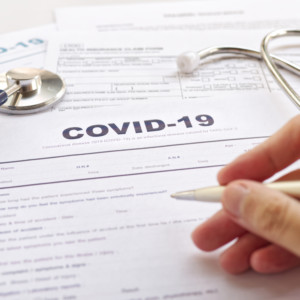
Coronavirus Disease 2019 Rotator Graphic for af.mil. (U.S. Air Force Graphic by Rosario "Charo" Gutierrez)

Just when you thought that spring is here and it’s time to take off with the business, we get hit with a major disaster.  Who would have thought that during our lifetime we would go through something like this?  I looked at my business and tried to determine how this would affect it for the next year.  This should give you an opportunity to look at your business also and see how it too will be affected.

When I owned my tow company, my wife and I would take off for a week and plan our business for the next year.  We would pick a nice destination (Vegas) and book a suite and stay there for a week and work on a business plan along with a little bit of play.  It’s the perfect time for you to do the same.  The only problem is you are locked in your house.  Nonetheless it’s time for you to put your company under a microscope and make decisions.

Here are a few things you should look at:

1. What impact did this have on your business?

2. What business could you lose?

3. Is there anything to gain as a result of this disaster?

4. What will towing look like when this is over?

Call some friends up and get their input on the questions listed above.  Since the government is giving out financial aid, take advantage of it and apply for as much help as possible.

Here are the next things to evaluate:

1.Where are you Making Money?  Identify your best customers and make sure you continue to take good care of them.  It might be body shops, or police calls, or even private property.  Once you have identified your good customers, try to figure out how to expand that customer base.

2. Employee Evaluation – Evaluate everyone that works for you.  If you have managers, have them help you with the evaluation.  I did this when I owned my tow company.  It was amazing.  I had managers point out things that I was not aware of. For example, the person I thought that was my best dispatcher turned out to be my worst dispatcher, and he had the highest salary.  I did not replace him, but I did put him on an improvement program.  You will be surprised about the things you learn once you start to look at your company closely.  One thing I recommend is that you get all your employees involved.  Give them a survey that asks what could be implemented that would make the company better.

3. Office Stuff – As you sit at home discussing things that should be replaced or repaired with family members, look at your computers and the software you are using.  There are several good software systems that support the industry, and remember, they are looking for ways to improve their customer base. You might be able to get a good deal on new software that can save you money.   Look at your phone system and see if it is providing you what you need to run your business. 

4. Trucks – The government is doing SBA loans at a low interest rate over 30 years with no personal guarantee.  This might be an opportunity to replace some trucks if you qualify.  Look at everything that is being offered by the government and see if you qualify to take advantage of these opportunities.  The payroll plan is definitely worth trying to get.  It’s free money to pay your employees for two and a half months while you wait for your business to come back.  It’s not refundable if you are paying your employees.

5. Your Facility – While employees are sitting around waiting for things to happen, hand them a paint brush or a hammer and start fixing up the place.  Let them add their personal touch, and it will give them pride in your company.   Maybe you want to add a small storage shed or tear one down.  Do anything you can to improve your company appearance.  This can be a selling point for your customers, new or old.

6. Training and Education – Go online and see what computer courses are available for your employees that would improve their work skills.  Maybe they can take a class on communications.  This could improve efficiencies in the office and benefit your customers at the same time.

7. Owner Education – Take a look at yourself and see what areas you can improve in to make the company better.  Things like how to offer compensation programs for your employees, how to improve moral, or any additional benefits.  There are insurance companies offering discounts on types of insurance they offer.  Maybe you can save money by changing the coverage on things at your company like trucks or garage keepers insurance.

8. New Lines of Business – This could be an opportunity to look at new lines of revenue within your company not relating to towing and try and start something new.

For some businesses, this could help their business.  I look at my potential customers, and they are calling TowTrax because they are short staffed at their call centers.  We offer the perfect solution and can save them money.  Once I get a customer up and running, I now have tows I can offer to tow companies that are hurting for business.

One thing is for sure, we will all learn from this experience.  Things about yourself or family members you never knew. I’m constant amazed every day how the people of this country came together and helped each other out.   Offering time services or money to make liv


es better for others.    

Here in Texas, tow companies are sticking together and fighting the politics to keep their doors open and living with some of the policies our state or cities are trying to implement.  Hopefully it will soon come to an end, and life can get back to normal.

What will the new normal hold for us?  Anyone who feels like talking, give me a call I would be happy to chat.

Insurance Ignorance

As an industry and community, we take insurance claims and the insurance process for granted since we deal with it every day.  What we may not realize, or even consider, is that a vehicle owner may have no experience at all when dealing with a wrecked or damaged vehicle and have no idea how the system works.

I will give you a case in point:  My sister bought a nice 2003 Lexus ES300 from a local (small, rural) used car dealer that doubles as a repair shop.  She had owned the car for a couple of years before the battery decided to freak out and catch fire. When it did, it burned the wiring harness around the battery, the associated wiring and components and burned a one-foot area into the paint on the hood.  We live in different states and don’t talk every day, so she didn’t call me until she was nearly beside herself in frustration and annoyance: She had the shop guy tow her car to his shop and try to make repairs.  She then got hit with a $2,800 estimate–and still had no car to drive!  That didn’t even count repairing and repainting the hood.

My first thought was, “Don’t you have full coverage?”  Yes, she did.  I asked her why she didn’t just file a claim, have them tow the car to a dealer or major body shop, and get a rental car.  SHE HAD NEVER, AT 55 YEARS OLD, HAD AN INSURANCE CLAIM!  She had no idea how it worked, and since she didn’t have a wreck, she thought that something like this wasn’t covered.  It was covered, of course, by the comprehensive side of her policy.  She called me an hour later and was elated.  Her insurance company arranged a rental car, the kind where they pick you up, and they had the car towed to a large local dealer with a body shop, so both the mechanical and cosmetic repairs could be made at the same location.  She got her car back two weeks later, and only paid the $100 deductible.

Recently, our company towed a wrecked 2010 Dodge Charger.  It was hit on both ends, had pretty good front end damage, and had the rear axle twisted.  The next day, the owner’s brother showed up and wanted the car towed to a local shop.  He also wanted to pay the bill.  He lost his mind when we told him the tow bill was $350 (+/-) and the second tow would be $100.  He wanted to negotiate, became angry, and I had to interject. 

“Don’t you have full coverage insurance?” I asked.  Well, yes, it was his sister’s car, and she didn’t know how to “deal with car stuff,” but evidently, “the brother did” — or so he thought.

We told him to file a claim with her insurance for several reasons.  I’ll get to that in a minute.  He refused, insisted we were ripping him off, and paid the initial tow bill.  He had our competitor tow his car to the small shop to “show us something.”  Whatever.  He called two days later because his shop guy (with his one-bay, old garage) couldn’t get the car started, and he insisted that it was our fault.  We must have done something to his sister’s car when we towed it, because, and get this–”it was running before she wrecked it.”

I asked the guy to come in, and I laid out some information for him.  First, you need to be aware of your insurance coverages.  Next, you call your insurance company as soon as possible after an accident.  That allows them to start the claim process.  Next, let them handle the claim.  They’ll pay for the accident tow, any storage involved, and the secondary tow.  All you pay is your deductible. That’s what insurance is there for.  Next, and this is a big one – if you’ve never contacted your insurance company to get them involved, and you take your car to “Bubba’s Garage,” and Bubba throws his hands up, realizing this repair is too big for him – there’s a good chance that you’re on your own at that point.  If you never gave your insurance company a chance to get involved, to have an adjuster look at the car, and to authorize repairs, there’s a 99% chance they’re not going to do anything when you contact them with your messed up, basket case of a situation after the fact.

You must realize that if someone has never dealt with this process or had a close friend or family member who has, they likely have no idea how this all works.  I hate to assume that anything is totaled, but a 10-year-old car with major front-end damage and the rear axle half-torn out is likely a total loss.  They’re paying Bubba to fix a car that needs to be replaced and will likely never be properly repaired. 

Now – here’s where you come in as a towing industry professional:  You must recognize when someone isn’t up to speed on how insurance works, and that recognition needs to happen at the wreck scene or shortly thereafter.  You can calm the situation by saying, “Let your insurance company handle it.”  These people may be ignorant to how insurance works, and then you add stress, frustration, anger, and a little shock, and that the person isn’t thinking straight.  Be the voice of reason and save yourself a whole lot of heartache in the meantime.

9 Quick Cleanliness Tips from Agero

  • Clean and disinfect frequently touched objects or surfaces.
  • Have hand sanitizer available for your employees and in your trucks.
  • Avoid standing within 6 feet of customers or co-workers.
  • Politely decline handshakes from thankful customers.
  • Avoid touching your eyes, nose and mouth.
  • Cough or sneeze into your elbow, not your hand; if you use a tissue, through it away immediately and wash or sanitize your hands.
  • Temporarily stop requiring signatures to reduce the use of high-touch objects. (Agero is currently waiving this requirement.)
  • Communicate with your teams and partners if you are feeling unwell.
  • Temporarily restrict all ride-alongs for tow events. (Agero has currently implemented this restriction.)

For more information, visit www.agero.com

TRAA Helping the Industry Navigate the COVID-19 Crisis

It’s safe to say the COVID-19 pandemic has impacted the entire country. The Towing and Recovery Association of America, Inc.® (TRAA) has been the towing industry’s advocate throughout this crisis. TRAA has been here for you and supporting towers across the country in multiple ways:

CISA Advisory

When the crisis first erupted in March, the U.S. Department of Homeland Security’s Cybersecurity and Infrastructure Security Agency (CISA) released a federal advisory to the states outlining essential employees that could work during stay-at-home orders. While indirectly covered under transportation, towers weren’t expressly cited in the advisory so TRAA paid for a legal determination and official letter for every member so they could continue operating. Not one to stop there, TRAA and their federal lobbying firm were instrumental in getting towing and recovery and roadside services expressly included in the revised CISA advisory a few weeks later. Since the original list of Essential Critical Infrastructure Workers was from 2007, this change was a major win for the entire towing industry!

CARES Act (H.R. 748)

As the crisis has worn on, TRAA has continued to be the industry’s best resource. When the CARES Act was passed, TRAA immediately informed its members on the four provisions designed to assist small business owners such as towing companies. From information on how to apply for beneficial loan opportunities, to tax credits, and payroll tax delays, TRAA has been helping its members navigate the available resources during this evolving and unprecedented situation.

Understanding the difficult choices that many towing companies are facing, TRAA even put out information for its members on the dos and don’ts of downsizing fleets for those in need.

The COVID-19 pandemic is a healthcare crisis that has turned into a global economic crisis. During these unparalleled times TRAA continues to work on the industry’s behalf with towers across the country finding comfort and support in their TRAA membership.


If you are not a member of TRAA, head over to their website and join now: http://traaonline.com/join-now/

In Need of a Remote Solution? Beacon Software Offers Free 90-Day DA Subscription

In the wake of COVID-19, Beacon is offering a free 90-day subscription of their flagship product, Dispatch Anywhere, to assist first responders in need of an immediate solution. This offer is available to new DA customers or preexisting TowMagic and TowLien customers. There are options for Towing and Roadside professionals who are suddenly faced with the daunting prospect of working remotely. Beacon Software is offering a solution to those who are scrambling to communicate effectively with their employees and customers from home or on the road.

About Dispatch Anywhere

Beacon Software’s Dispatch Anywhere is the software that pioneered the current technology used by progressive towing and roadside assistance companies and has always been an asset to towing and roadside professionals on-the-go, who seek options to work remotely. This software offers state-of-the-art features, such as Digital Dispatch, Motor Club Billing, Drag and Drop Dispatch, Auto Dispatch, TowSpec, and Custom Accounts Receivables with Quickbooks. DA creates a productive workflow for the dispatcher, driver and account receivable functions.

“Our only goal is to make it easier for first responders to do their jobs safely and efficiently,” says Todd Althouse, president of Beacon Software. “We know drivers are working longer hours to keep essential businesses and medical facilities stocked and we think this is the best way for us to provide the necessary resources to them that will support remote work.”

Beacon Software’s Coronavirus (COVID-19) Response

Just like their software, Beacon employees have always had the ability to work remotely. Beacon Software remains open and fully functional while protecting the safety and health of their staff and customers. As part of their SOC2 Certification, Beacon Software has a detailed Business Continuity Plan (BCP) designed to guide their business during unexpected events, such as COVID-19.

About Beacon Software

Beacon Software creates technology that enables towing & roadside providers to manage, update, dispatch, track and invoice jobs, in real time, from anywhere in the world.  Their mission is to provide a suite of features that allows towing & roadside professionals to run their businesses without technology getting in the way. To begin your 90-Day free subscription of Dispatch Anywhere, create your account at DispatchAnywhere.com or call 866-437-6653. 

Staley Cash Appointed CEO of TowTrax

TowTrax founder, Dan Messina, announced today the addition of Staley Cash as CEO to the TowTrax team. “Staley brings a wealth of roadside assistance industry knowledge to our team, and we are very fortunate to have someone of his stature and experience as our CEO.”

Staley recently served as President of Driven Solutions, Inc. and has over 20 years’ executive experience in the roadside assistance industry.   Staley will work closely with founder and Chairman of the Board, Dan Messina, to implement the TowTrax platform nationwide, bringing on-demand response to consumers needing roadside assistance.

Wes Foster also recently joined TowTrax as Chief Operations Officer and will have responsibility for day-to-day operations.  “Wes also brings a huge depth of industry knowledge to our team, and we are very excited to have both Wes and Staley on board.  The TowTrax platform is true digital dispatch to the closest service provider, and we can’t wait to expand the rollout of our solution. 

TowTrax is a nationwide roadside assistance platform targeting motor clubs, law enforcement, and other service providers.

The TowTrax network of thousands of tow companies across the United States allows us to locate and respond to roadside assistance requests wherever they may be, dispatching the nearest tow truck to a customer’s location in an efficient, seamless manner. Our relationships with tow companies and service providers ensure nationwide coverage to all stranded motorists.


For more information, contact Dan Messina at 844-TOW-TRAX (844) 869-8729.

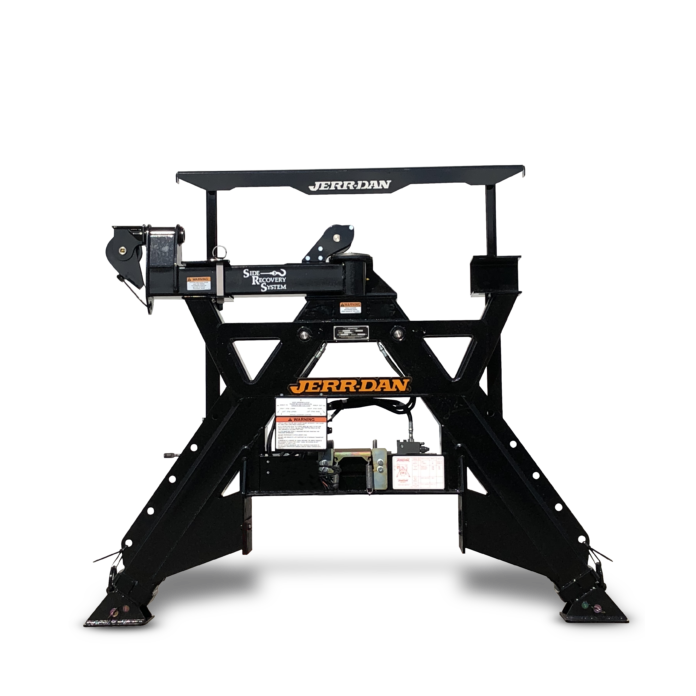
Jerr-Dan Sliding Winch System

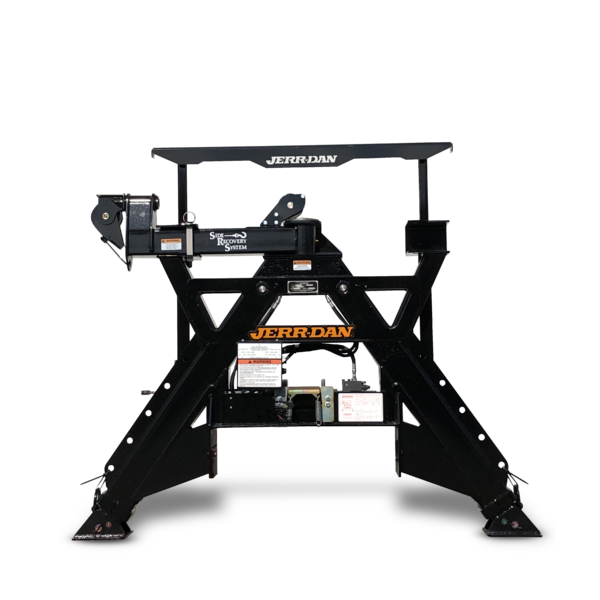
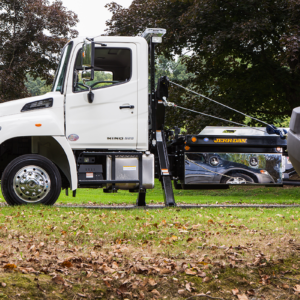
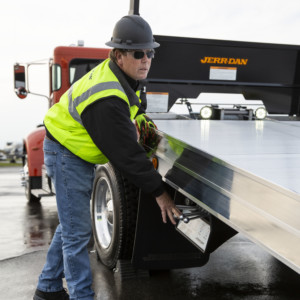
The Jerr-Dan Sliding winch is a system that allows the entire recovery winch at the front of a carrier bed to move side to side over most of the bed width in order to load vehicles, as straight as possible, onto the bed. While this innovation is fairly unique to Jerr-Dan in the US market, there is a growing need for operators to use this specialty system as the automotive industry increases production of vehicles with only offset tow-eyes in the front and rear bumpers.

These tow eyes are very popular in European-manufactured cars, as well as most luxury and sports cars. And, this design style is becoming more prevalent on everyday vehicles coming into the market both domestically and internationally.  Tow eyes are designed to sustain a very limited amount of angled pull: both “side to side” and “up and down.” The Jerr-Dan sliding winch system is designed to work within those angles, with a system that contains a winch that moves in its entirety, which helps with self-centering before loading and allows for the winch to float freely during winching.

This innovative design permits an operator to tow without incurring damage to the vehicle. The sliding winch system from Jerr-Dan provides the operator with better control of a damaged vehicle as it is winched onto a carrier bed without the need of additional side pullers or snatch blocks. Without the need for additional equipment, the operator can be more efficient, ideally spending less time on the scene, with less equipment to carry and potentially less fatigue on the job.

Originally created to meet the needs of exotic cars with side pull points, the sliding winch system provides flexibility for operators to tow cars of any design. The Sliding Winch System is currently offered on all new Jerr-Dan Standard-Duty and Medium-Duty Car Carrier models and can be added to your existing Standard- or Medium-Duty Carrier.


For more information, visit www.jerrdan.com

TRAA’s 2020 Legislative Action Workshop

It was a beautiful day in Washington, D.C. when I landed March 10, 2020. I was excited about the week to come and curious about what I would experience. TRAA had some of the top towing elite arrive in town to attend on Wednesday. The week began with a “Legislative Action” workshop featuring Congressman Jim McGovern and the Tremont Strategies group, Chet Atkins and staff.

Tremont Strategies, overseen by Chet Atkins, came on just over a year ago to work as the lobbyist for TRAA. Chet Atkins was the youngest ever to be elected to the House of Representatives in 1970. In 1972, Chet was elected to the Massachusetts State Senate and has chaired the Ways and Means Committee. He brings a wealth of knowledge to the table to ensure that all towers nationwide are having their voice heard!

Chet Atkins’ staff briefed us all on the importance of having a unified mission when meeting with legislators. He said a good strategy would be to know our talking points, educate when needed, remember to thank them for their work, and most importantly ask them for their support, so our voices may be heard! The staff worked diligently to ensure that all the Thursday meetings with legislators set for TRAA and owners were kept.

We were then greeted by Congressman Jim McGovern. Jim was elected to the House of Representatives in 1996 and in 2001 took a seat on the House Rules Committee. Jim had attended last year’s meeting and had a great understanding for our industry.  He is a man that not only listened, but acted, and I can say he has a heart for our industry and towers. Over the next few days, Jim McGovern, while working on passing and funding the coronavirus bill, made many trips back and forth from the Capitol for us. He would just come and sit down and have dinner to make sure our needs were being met and our appointments were being kept assuring our visit would be successful.

Thursday morning, the day of our meeting with legislators, became an interesting day to say the least. All of Washington began to implode with threats of the coronavirus, and people started filing out of the Capitol and leaving D.C. first thing that morning. Tremont Strategies staff burned up the phone and ensured that as people left Washington in droves, that our meetings, all but a few, were kept.

“On a day filled with chaos fueled by fears from the coronavirus, towers along with the key members of the TRAA board met with 24 plus legislators from 12 states to voice their needs and concerns for the towing industry.”

Topics discussed with legislators were:

  • Support for federal “Move Over” Law efforts
  • Support passage for the Drivers Safe Act
  • Hours of Service
  • Amending Regulations that limit a tower’s ability to respond effectively on the interstate system.  (The 2015 Fast Act attempted to do this; however, the language need to be clarified.)

TRAA submitted and supported the changes to 23 U.S.C. 127, so that the new language used to clarify this bill for towers would be included during the next highway bill reauthorization.

On a day filled with chaos fueled by fears from the coronavirus, towers along with the key members of the TRAA board met with 24 plus legislators from 12 states to voice their needs and concerns for the towing industry. The afternoon following meeting with legislators was topped off with a 2-hour legislative open house. Speakers that attended were: Representative Anthony Brindisi, Representative Chris Pappas, and Representative Cindy Axe. All three representatives listened to the concerns and fears offered from our towers, TRAA, and Auto Return’s Jon Borowski. They all explained that they have a better understanding of our wants and needs and pledged their support to help pass bills that will serve and protect our industry.

I also learned this week about the specifics of what it takes to turn a bill into law; it is a long extensive process that takes working back and forth with your legislators and their staff. This past week (whether you were a member of TRAA or not) the TRAA, along with key tow company owners, voiced your needs and concerns directly to your state legislators. I must say, if you are not involved with your state legislators and a member of your state association, you are backing up! It is hard to complain about what is going on in your industry when you have not registered your voice. If you are not a part of your state association, join and be active. I also recommend joining your national association and taking part in next year’s legislative workshop. The only way to make change is by stepping up and putting in the work to do so. The most rewarding part is seeing it happen; your name will be remembered as not just another worker in this industry, but a leader that strived to make changes that would positively affect this industry for years to come!


If we are going to change minds and change perspectives on our industry, we must get involved. You men and women are the professionals; who is better to have their voice heard than you? So, let’s get active on the local level and national level with our associations. Next year, I would love to see all 50 states represented by a constituent and meetings being held with all legislators. This is how you make change–by being active, so make your voice heard!


PRIME and COVID-19

The COVID-19 pandemic is impacting the way all of us live and do business.  Prime is aware that policyholders are facing unprecedented hardships and understands the importance of maintaining insurance coverage. Prime is honoring all state-declared moratoriums on cancellations for non-payment.  Prime is requesting that any policyholder that is unable to fulfill their normal premium payment obligations due to the impacts of COVID-19 to please contact us and we will work together to find solutions to this temporary upheaval.   Potential solutions include:

• Suspending coverage or canceling and amending policies without penalty

• Modifying payment terms, including extensions of premium grace periods and waiving late payment fees

• Providing a continuation of coverage on expiring policies

• Deferring any non-renewal underwriting actions and/or

• Rescinding policies with future effective dates

We will evaluate the individual needs of each policyholder and customize a solution for them. We are available 24/7 and look forward to hearing from you by phone at 877.243.8181 or via email at quotes@primeis.com. During this time of challenge and uncertainty, Prime remains committed to serving the needs of its policyholders and producers.


For more information, visit www.primeis.com

Loans Available for Small Businesses – Act Now

The CARES Act (H.R. 748) authorized two Small Business Administration (SBA) programs providing federal money to allow you to keep your employees on payroll during the COVID-19 emergency and can provide low-interest loans with no personal guarantee.

These programs were funded with over $350 billion. There should not be an issue of the funding running out for these loans and grants, however, there is an overwhelming demand for them and individuals who submit their applications later will likely face delays in processing their applications.

Paycheck Protection Program (PPP)

This is a loan equal to 10 weeks’ worth of payroll costs (excluding employees who make over $100k) that converts into a grant if the borrower keeps all pre-crisis (before Feb 15th) employees on the payroll through an eight week period after the loan is granted. If employees are laid off, borrowers are responsible for a portion of the loan proportional to the salary of the laid-off employees. A full conversion from loan into a grant can occur if the borrower eliminates the reduction in employees and wages by June 30th, 2020. Any business with less than 500 employees may apply.

You will need to apply through your own bank if they are qualified SBA lender. See your bank’s website to determine whether they are a qualified SBA lender.

The PPP loan application and more information are available on the U.S. Department of Treasury site. Lenders may begin processing loan applications as soon as Friday, April 3, 2020. Contact your SBA lender ASAP for more information.

Economic Injury Disaster Loan (EIDL)

These are up to $2 million loans with a maximum fixed interest rate of 3.75% and loan terms of up to a maximum 30 year repayment period to be used to meet costs such as payroll, rent, mortgage etc, that cannot be met as a result of the COVID-19 crisis. Terms are determined on a case-by-case basis based on the borrower’s ability to repay. No personal guarantees required. Collateral is required for loans of over $25,000 but the SBA will not decline a loan because of lack of collateral and will only require applicants to pledge collateral that is available.

There is currently a nationwide disaster declaration and small businesses in all U.S. states and territories are eligible to apply. In addition to applying for the EIDL loan, when submitting their EIDL application, applicants can also apply for a $10,000 loan advance. This “loan advance” is paid out within three days of a successfully submitted application and does not need to be repaid, even if the pending EIDL application is subsequently denied.

These loans are administered directly through the SBA, not through your bank. The application can be found here.

About Towing and Recovery Association of America, Inc.

Founded in 1979 in Kansas City, Missouri TRAA is the umbrella trade group and national voice of the towing and recovery industry, which is estimated to include more than 35,000 towing businesses in the United States. TRAA’s membership includes professionals from the United States, Canada, Japan and New Zealand. TRAA is a 501 (c)(6) nonprofit membership national towing association, governed by a representative board of directors whose officers are elected from the membership.

TRAA represents the interests of the towing and recovery industry on Capitol Hill, sponsoring annual events and meetings that are attended by members as well as state association officers and leaders. TRAA also produces an array of educational products supporting professionalism in towing and recovery and in business management.


For more information, visit traaonline.com

Golight’s Stryker ST Series Offers an Enhanced Feature Set That Meets and Exceeds Industry Demands

Founded in 1994, Golight, Inc. continues to set the industry standard in remote-controlled lighting today. Based in Culbertson, NE, the company has lights in service around the world. New technologies and new models are constantly under development, and Golight remains committed to delivering durable, versatile performance guaranteed. The company pledges to keep its eye on the future while embracing innovations in the lighting industry, to design and manufacture the highest quality products in the marketplace, and to stand behind its products with unparalleled warranties and service. Golight Inc. is proud to announce the New Stryker ST Series.

The Stryker ST Series is the culmination of continuous field studies and voice-of-the-customer research that identified desired functional enhancements across the company’s broad land and marine markets.  Some new features in the Stryker ST line include:

  • Multiple Unit Selector Function: Allows for independent control of 2 units with 1 remote
  • Home Position Function: On-Command return to 0° home
  • New Wireless Technology Benefits including: Simultaneous Pan + Tilt; Multiple users can operate lights in close proximity without interference.
  • Smart Programming Logic: Quick and simple pairing without dipswitches
  • Fluorescent Remote Buttons

The Stryker ST’s newly designed remote-control unit is as simple to operate as it is intelligent. Large buttons are easy to access even with gloved hands, and fluorescent iconography makes the controller buttons legible in dark or low-light conditions. Now powered by two regular AAA batteries, the controller is more convenient to maintain than ever.

The Stryker ST comes standard with 12-volt electrical system compatibility and is available with 24-volt compatibility. The lamps come with either LED or halogen light sources.

The LED Stryker ST lamp employs 10 high-flux LEDs, producing an industry-leading 544,000-candela beam projecting to a maximum distance of 4,839 feet. The halogen Stryker ST lamp produces a 225,000-candela beam projecting to a maximum distance of 3,113 feet.

The Stryker ST is available in a permanent-mount model with a stainless-steel mounting bracket and a portable model with a magnetic base. There is also a magnetic base adapter kit that allows users to install a Stryker ST with a magnetic base to a non-magnetic surface, such as aluminum. An optional remote-control holster is also available.

Both LED and halogen lamps come with a five-year unlimited warranty. Like all its products, the Stryker ST Series lamps are supported by Golight’s unparalleled customer service department, which prides itself on accessibility and effectiveness.

For more information, please visit http://www.golight.com. 

Industry Report Highlights Adoption of Emergency Lighting In Response to Increasing Roadway Fatalities

A 2019 Emergency Responder Safety Institute (ERSI) report stressed the importance of elevating scene lighting.

In the first two weeks of 2020, seven roadway responders were struck and killed by vehicles. That’s seven lives in 14 days with three of those lives belonging to tow truck drivers.

In an era of distracted drivers, tow companies are adopting new emergency lighting and vehicle conspicuity practices to better alert drivers and divert oncoming traffic away from the scene. The Emergency Responder Safety Institute (ERSI) recently released a report summarizing 44 struck-by fatalities of U.S. roadway responders in 2019, the first report of its kind to include mobile mechanics and tow truck drivers among first responders. Another study, analyzing data from the Bureau of Labor Statistics, found that 191 tow workers were killed between 2011 and 2016 with 64 percent of those deaths being attributed to motor vehicle incidents.  So, what can be done?  As part of the 35-page report, the ERSI suggested several mitigation strategies:

THE IMPLEMENTATION OF APPARATUS TRAFFIC ADVISORS

The ERSI documented a number of organizations that have adopted traffic advisors, lit amber/yellow arrows sticks that improve visibility and give clear direction to approaching motorists. Additionally, the report recommended multi-level or high-rise light systems above obstructing views and to create visibility farther away from the scene. While some advisors utilized directional pulsing light bars, the study found that large arrow boards were especially effective at diverting motorists away from the scene.

Command Light, an industry leader in emergency scene lighting for more than 25 years, manufactures a series of Traffic Flow Boards that can rotate up to 360 degrees, giving drivers the ability to direct the advisor toward oncoming traffic as they position the rig for recovery operations. When not in use, these Traffic Flow Boards fold down for a low-profile design. Command Light offers three different traffic pattern variations powered by 12V DC.

THE USE OF LIGHT TOWERS FURTHER ENHANCE ROADSIDE SAFETY

Traffic flow boards can help divert traffic away from responders.

The report also addressed bright white lights, which often cause glare and visibility problems for crews and motorists when these LEDs are not properly elevated. The report strongly suggests elevating and positioning white light to illuminate only work areas. Light towers are one of the most effective ways to control lighting.

In fact, these towers offer up to 360 degrees of rotation, while the light tower clusters and elevates the light, much like sports stadium lighting, to improve illumination for recovery teams while creating non-glaring light that alerts motorists of the incident ahead. To illuminate dual work areas, Command Light offers optional backlight that enables the bottom row of lamp heads to rotate 180 degrees, and Command Light’s design allows the tower to overhang the vehicle in a streetlight position, directing the light down as suggested by the ERSI report.

Command Light offers more than 20 different DC-powered light towers in varying heights and eight different fixture choices. To see the full tow industry catalog, visit bit.ly/tow-catalog. And to ensure more companies can equip their trucks with a light tower, Command Light commissioned HiViz LED Lighting, a FireTech brand, to create an economical fixture for its Knight Series, Shadow Series, and Straight Shadow models. This LED shaves the cost of a new light tower by 33% while delivering a 14,000-lumen output per fixture.

“We can’t say enough about elevating scene lighting, whether your crew is deploying a traffic advisor or a light tower,” said Roger Weinmeister, Command Light President. “Seven lives in 14 days. It’s unacceptable. The ResponderSafety Team said it best after releasing its ERSI report, ‘We simply cannot wait another day to make this a top priority.’”

The ERSI has made its tracking of 2020 struck-by-vehicle deaths to date available to the public at www.respondersafety.com/FatalityReports. The ERSI also produces ResponderSafety.com and the ResponderSafety Learning Network (learning.respondersafety.com), which offer online training and traffic safety certification programs.

[alert-success]A BLEAK START TO 2020

In just nine days, three tow truck drivers were killed while aiding the public.

  • In Maywood, Ill., Andre Dove-Ferdere, a 23-year-old tow truck driver, was struck and killed while assisting state police in towing two cars from a crash. He died on the scene. His emergency lights were activated. The incident happened at 6:03 a.m.
  • In Millani, Hawaii, Aaron Malama, a 43-year-old tow truck driver, was struck while standing next to a stalled vehicle on the freeway. He was transported to the hospital where he later died.
  • In Watertown, S.D., a vehicle struck and killed Dales Jones, 47, while he was trying to remove another vehicle from a ditch. The incident happened at 8:35 am.[/alert-success]

Auto Data Direct Offers Unique Online Tools for Tow Operators

Responding to State Specific Requirements

When the Florida and Georgia legislatures made sweeping changes to tow statutes in those southern states, Auto Data Direct (ADD) responded. The popular web-based service, known for its electronic certified notification letter tools and access to real-time registration and title data, modified its program to assist tow operators in meeting the new requirements.

In Florida, effective January 1, 2020, all towing companies, title companies who process tow liens, mechanic shops and body shops are required to send their notification letters for sale or lien through an approved third-party service. If your company is an Auto Data Direct (ADD) customer and already process letters through its DirectPost-Office (DPO) product, your business is all set. ADD has provided a high-quality, third party notification system recognized by the Florida Department of Highway Safety and Motor Vehicles (DHSMV) since 2003!

When the Georgia legislature overhauled its rules, which became effective September 1, 2019, it required tow companies to send a notification letter developed by the Council of Magistrate Court Judges by certified mail or hand delivery. It included changes in the timeframe during which letters must be sent. And again, ADD responded by modifying its system and letters to meet the new requirements. As an added benefit, the Georgia Department of Revenue has designated ADD as its authorized vendor for motor vehicle records. For details on Georgia’s statute changes and information on ADD’s designation as an agent for records, visit dor.georgia.gov/abandoned-vehicles.

For those who aren’t familiar with ADD’s DirectPost-Office (DPO) certified mail product, it was launched in 2003 to provide Florida towing companies an easier way to send notification letters to owners, lienholders and insurers by creating certified mail and inserting the letters into the USPS mail stream electronically. Since then, DPO has expanded its letter services for towing operators in Texas, Alabama, Connecticut, Indiana, Georgia, Mississippi, North Dakota, Missouri and Tennessee. Whether ADD has letters specific to a tow operator’s jurisdiction, its record access and letter services using custom forms are available either directly through an ADD account or through many tow management systems. ADD contracts with many top integrators to provide easy access to its record and letter tools.

ADD’S Suite of Online Tools Are a Game-Changer for Tow Companies

DPO is a tow operator’s best friend. It combines letter creation with state record searches to complete forms and send certified letters through the United States Postal Service without an aggravating trip to the Post Office!

As a compliment to DPO, ADD’s multi-state real-time motor vehicle records save time, money, and frustration when it comes to getting notification letters out in a timely manner. Coined DMV123, ADD’s most sought after service allows its customers, who qualify under the Drivers Privacy Protection Act (DPPA), to search through its secure system using a VIN and immediately retrieve the most current record available from a jurisdiction, in real time. As already mentioned, the Georgia DOR has designated ADD as its official agent for records.

Using ADD’s National Title Pointer helps narrow down the search when the state of origin isn’t easily identified. The Title Pointer uses data provided directly from the National Motor Vehicle Title Information System (NMVTIS) to find the most recent state of title. Once identified, ADD’s customers can search the real-time database if that state is available or send a good faith letter directly from their ADD account to the appropriate jurisdiction. The National Title Pointer report also meets state requirements that call for a NMVTIS vehicle history to be run on vehicles prior to processing notification letters, as is the case in Florida.

Once a vehicle is towed, and the record is accessed, DPO allows the data to be merged into the appropriate form, saving keystrokes and ensuring accuracy. Once the letter is electronically submitted to the mail stream, DPO allows for tracking the certified letter every step of the way providing details on when the letter(s) was received, or if it was undeliverable. The DPO archive provided in an ADD account gives tow operators documented proof that notification requirements were followed if a question arises about whether the appropriate actions were taken to find the owner/lienholder prior to holding a public sale.

ADD is in the unique position of being the only NMVTIS history provider that is also a consolidator of JSI (junk, salvage and insurance) data for industry members, making both accessing a history and reporting data as easy as 1, 2, 3. For tow/wrecker operators who need to report junk or salvage vehicles to NMVTIS, ADD provides a solution from the same web-based account. Any entity that deals in more than five junk and salvage vehicles per year must provide specific vehicle information to the national database on at least a monthly basis. NMVTIS reporting applies to any vehicle a company parts out or crushes, or any vehicle for which a salvage certificate, a certificate of destruction or similar document is obtained. If a business has the right to sell or re-title, rebuild, restore or crush the vehicle, and it is a junk or salvage vehicle under the federal definition, it must be reported to NMVTIS.

ADD’s NMVTIS upload tools are designed to help businesses fulfill the reporting requirement quickly and easily. Two account types are available to suit any size business or upload volume. Full-service accounts include individual vehicle entry, batch vehicle entry using a spreadsheet and business-to-business processing which can be arranged with the customer’s IT staff, all for a low per-report fee. Basic-service accounts include no-cost individual entry and emailed confirmation receipts.

Learn More About ADD and Get Started Today!

ADD provides innovative tools every step of the way for tow operators focused on ensuring their business processes are efficient, accurate, and cost-effective, all backed by the friendliest, most knowledgeable customer service in the industry.

If your company already has an ADD account but is not using DPO, just click the orange DirectPost-Office icon in My Apps to begin processing your notification letters. If you are new to ADD, click on the sign-up button on its home page to take advantage of these valuable business tools. And, if you use the services of a tow management system, ask if you can access ADD services through your current provider.

ADD’s secure web-based system allows account holders to access services through any internet-capable device. The easy-to-use system is affordable and saves precious time and money when it comes to moving impounded vehicles through the required processes. With no contract or monthly fee, ADD allows its customers to pick and choose the services they need, when they need them.


For more information or to schedule on online demonstration and training class, or to speak with one of our friendly and knowledgeable customer service representatives, call 850-877- 8804 or email info@add123.com.

Managing Change, Efficiency, SOP, and Profit

Depending on where in North America you live and operate your towing and vehicle storage business, spring has either arrived or is just around the corner. Spring is generally a happy time, where nature begins its renewal cycle, encouraged by nature’s all-consuming driving force. Many of you will be thinking of ways in which to improve the efficiency of your business and its competitive advantage.

Creative Destruction

In your grandfather’s day, knowledgeable people would have told you that the only two things in life that are certain are death and taxes. In the last 75 years, other certainties that have entered the equation; technology has and continues to rapidly change the way we do things.  It’s known as “creative destruction.”  Today, the only things in life that are certain are death, taxes, and CHANGE!

Simply put, “creative destruction” is the time a new and practical idea replaces the previously embedded process. More than 100 years ago, Sears Roebuck created a print catalog pictorially displaying goods and services. Almost every household in rural North America purchased items from the Sears Roebuck catalog, yet although Sears made the move to brick-and-mortar stores as consumer demographics changed, they did not anticipate nor adapt to the changing world of commerce or the Internet. (Destruction!) Compare the story of Sears, with that of Amazon, they both fulfill basically the same function with the one major exception:  Amazon, the newcomer, took advantage of and pioneered changing technology that would influence consumer buying and producing its virtual catalog as a website in the CLOUD. (Creation!). Is your company destined to be Amazon or Sears Roebuck? Are you and your management team looking to future trends and or changes that may seriously affect your ability to generate cash flow and remain profitable?

The simple way to improve the efficiency of any business process is to break them down into basic functions and create your own improved standard operating procedures (SOP). It’s never too late to review how your company performs any given task, even though the need and methodology in completing the task have been the same for decades. Moreover, if you have not yet taken a leap of faith into the world of management software, regardless of your company size, it’s time to revisit this opportunity.

Although, often looked upon as one industry, towing and vehicle storage are two separate businesses, and those states/provinces which license and regulate both, each have separate statutes and administrative rules. VTS Systems is a niche market, Texas-based software company which for more than 20 years has provided state/province compliant software to simplify and effectively manage both vehicle towing and vehicle impoundment and storage requirements.

SOP Tasks

The towing of a vehicle is a pretty simple process and easily defined by SOP tasks:

  • Request/Call for service
  • Define, consent, or non-consent tow
  • Select a qualified operator and capacity/capability of recovery vehicle
  • Dispatch recovery tow vehicle to the incident location
  • Load incident vehicle and transport to a known destination
  • Create a tow ticket/worksheet, receive payment or billable invoice

Break down each of the above SOP’s and analyze not only the task, but more importantly, how you can perform the task better, including a public relation [PR] perspective, so you can obtain all relevant information more efficiently, and for less cost. Once established and refined, SOP guidelines will improve not only your service to the customer, but a defined structure will help protect your company from potential litigation, so PR is important. If you are operating even the most rudimentary automated software, the basic flow of the software will obtain the needed information. However, if your company is using a pen and paper, we suggest that you create a Q&A list as part of your call answering SOP.

Focus on Standards Over Shiny New

Perception is not always a shiny reality. A shiny new company tow truck may project an image of success. However, long-term business and financial success does not begin, nor end with shiny new trucks, as they often carry a financial burden.  Focus on setting standards. it does not have to be new, older tow trucks if clean, and well maintained, often project a trusted conservative image. If operating multiple trucks, set a goal of having them all the same color, plus a company branding/logo and a door wrap will increase public awareness. This, along with polite operators wearing clean uniforms, present an image of professionalism and efficiency.

Creating and coding software to automate the above towing process is a time-consuming task; it must take into consideration state/provincial statute, tax code, administrative rules set by the regulator, the county, and often local law enforcement [LEA]. However, from an industry knowledge and software coding perspective, the development of Vehicle Storage Facility [VSF] management software is far more complex than supporting a tow only function.

VSF Function Requirements

In addition to the towing SOP functions noted above, the VSF function require the following:

  • Vehicle Impoundment – In some states/provinces this is a no-charge item, but included as part of the daily storage charge, while in others, it’s defined as a separate chargeable process and may be taxable.
  • Obtaining Vehicle Ownership/Lienholder Records – The manual process of obtaining ownership/lienholder information from the state of record is both costly and time consuming. However, real-time, online electronic access to Motor Vehicle Records [MVR] is available from 36 states. Retrieval of MVR information from a state database requires a licensed VSF operator and compliance with the federal Driver’s Privacy Protection Act [DPPA]. In Canada, no MVR information is available either electronically or in real time to towing companies or VSF’s without going through an attorney or a paralegal agency.
  • Timely Processing of  Lienholder/Notification Letters – Almost every state/province has different requirements for lienholder/notification letters, in some only one letter sent via certified mail, or electronic certified mail, return receipt requested before the impounded/abandoned vehicle may legally be sold at a public auction or public sale. However, most states/provinces require two lienholder/notification letters mailed to all registered owners and all lienholders of record within the time stipulated by the state or provincial regulator.
  • LEA Notification of Impoundment and Abandonment -Depending on state/provincial statutes, and administrative rules, the VSF maybe required to notify LEA of non-consent private-property tows within two hours of impoundment or at a time stipulated. In addition, some state/provinces require the VSF to send law enforcement a notice of vehicle abandonment, if the vehicle remains unclaimed for x-number of days following impoundment or the sending of the first lienholder/notification letter, whichever is applicable. Where applicable, state/provincial LEA may take possession or virtual possession of the abandoned vehicle, assume the responsibility of sending a second and final lienholder/notification letter, [if applicable] and processes the vehicle through to public auction.
  • Public Auctions/Public Sale -Individual state/provincial guidelines stipulate the minimum number of days required between the mailing of the second and final lienholder/notification letter [if applicable] before the abandoned vehicle is eligible for sale to recover outstanding towing and vehicle storage debt. 

Management Software Needs

All management software should have inherent flexibility to accommodate state/provincial statute and administrative rules, and provide auto-fill and completion of government, or processed documentation, in addition to simplicity of operation and security.

  • Security Controlled access to the software by multiple levels of security, including, limits associated with each employee job function, company code, employee username, and a secure individual employee password will give access to authorized personnel operating from multiple workstations or remote input devices. Changes in authorized access should be in writing between the company’s authorized person [owner/CEO, etc.] and the software company.
  • Full SupportIncluding telephone and Internet interaction, along with individual one-on-one training and problem solving. The purpose of software is to automate data entry, thereby simplifying the daily operating process, and with correct training, eliminate upwards of 99% processing errors. If your software does not begin providing time-reducing assistance the moment the phone rings and fully automates every step, including: automated MVR retrieval and data placement, automated creation, and mailing of electronic certified mail lienholder/notification letters, automated flow and control of job or invoiced monies, and accounts receivable, the release process through to and including a public auction or public sale, and the completion of all required forms, letters, and documentation, then it’s time to look again and what is available.

VTS Systems provides the industry, and more importantly, its clients with professional business support, and time earned knowledge. We offer both PC and web-based [CLOUD] solutions, our time-honored PC offering is particularly effective in areas without adequate high-speed, full-time Internet connections or for those who simply want their data in-house. Whereas, our CLOUD-based offering provides MOBILITY, FLEXIBILITY, SIMPLICITY, and SECURITY anywhere there is Internet or digital cell phone service. If you would like to discuss how technology will continue to CHANGE our industry, and your business, call 877.374.7225 Ext 3.

Nobody Does Storage Lot Management like We Do–Period!

Ranger SST: Simpler AND Smarter Easy-to-Use AND High Productivity/Effectiveness

One of my favorite phones was the Motorola Startac – the first flip-phone introduced in 1996. The first iPhone was introduced 10 years later (June, 2007), and the first Android smartphone was sold in September, 2008.  I loved my Startac (beam me up, Scotty).  But now that I own and use both Apple and Android smart phones, I would never go back.  However, some elderly relatives and drivers are still wed to their flip-phones.  Why?  They seem easy-to-use.

Most tow management software (TMS) offerings – especially Ranger – are “easy-to-use.”   But is that criteria enough for choosing a solution that becomes the foundation for the future of your business?  Is it better to have ease-of-use for dispatchers or to improve the revenue growth and profitability of your business?  The good news: you don’t have to choose – with Ranger you get both: easy-to-use AND increased productivity/effectiveness for increased profitability (more calls per driver each month)–Simpler AND Smarter.  Don’t settle for a “flip-phone TMS” – Ranger provides a “smart phone TMS” solution that you can grow into and never grow out of. 

A few examples to illustrate the distinctions:

Job Entry

  • Easy: Receive Digital Dispatches from Motor Clubs or enter customer information, incident address, and a call is ready to be dispatched.
  • Effective (Smarter): … After account defaults auto-populate call information:
    • Leverage Google Place look-up to further streamline location inputs.
    • Use “Find Me” to locate “lost” customers using their smart phone.
    • Pinpoint motorist location on the Ranger map and send these geo-coordinates to the driver on their Ranger mobile app for accurate navigation = shorter ETAs.
    • Enter LP – Ranger returns VIN look-up detail, including year, make, and model.

Self-Service Job Entry by Customers

  • Easy: Provide a web-based tool for frequent business users to enter requests.
  • Effective (Smarter):
    • Use Ranger’s toll-free phone number for local residents to use in an emergency.
    • Stranded motorists enter call information and pictures that are forwarded to your dispatch for fast, reliable response to their request.

Pricing

  • Easy: Manually enter a price from the rate sheet.
  • Effective (Smarter): Ranger’s Pricing Factory
    • Use pre-configured, account-specific pricing along with the appropriate Extras (and pricing) for consistency and pre-configure “price points” for cash calls.
    • Modify pricing on-the-fly as needed for weather conditions and/or driver availability.
    • Handle complex recoveries requiring the alignment of services from multiple trucks with one or more invoices
    • Manage remote HD repair with all the parts in the back of the truck as “Extras.”
    • Automatically generate split invoices for motor club calls (isolating the amount to be paid by the customer).
    • Control pricing visibility to the driver (disclose or not), and the driver’s role (modify charges or not).
    • Prepare Quotes that can be emailed to a customer in advance.
    • Since pricing is fully integrated with the Ranger mobile app, dispatchers don’t need to figure it out and send messages to the driver. The driver doesn’t need to figure it out.  The Ranger TMS and mobile app do the heavy lifting.

Call Assignment to a Driver

  • Easy: Select an Available driver that is nearby from the Dispatch Board
  • Effective (Smarter): Ranger’s SmartDispatchTM
    • Use the link from the Dispatch Board to reset the map for job assignment.
    • SmartDispatchTM enables visual, drag & drop dispatch. Dispatchers can see ALL open jobs, and ALL available trucks, on ONE screen to make better deployment decisionsshortening ETAs and lowering fuel costs.

Messaging Drivers

  • Easy: Forward call information to the driver’s mobile app (Android or Apple).
  • Effective (Smarter): Ranger’s CommLinkTM mobile app
    • Auto-confirm the driver has viewed the call assignment without phoning.
    • Monitor whether the driver’s mobile device is connected (in coverage) AND whether the driver has granted needed permissions for communications (essential for Apple).

Messaging Motorists

  • Easy: Send text confirmation message to customer.
  • Effective (Smarter):
    • Automatically trigger messages to the motorist (Enroute, approaching Arrived) along with a picture of the driver – to alleviate customer safety concerns.
    • Send a satisfaction survey at the end of each call to gather immediate feedback on the customer experience and to address any unexpected issues.
    • Optionally send an “Uber link” to the motorist to track progress of the truck.

Track Driver Location and Status

  • Easy: Use a third-party GPS product to track location; mobile app tracks status.
  • Effective (Smarter): Ranger’s fully-integrated MapTrackTM
    • Use Ranger’s tracking / mapping solution with 15 different truck icons (truck type) and on-map indicator for PTO “On” and duration.
    • View Dashboards to check truck speed & idling; get alerts for possible fraud & theft.

Collect Payments On-Scene

  • Easy: Collect cash, and use a third-party app (e.g., Square) for credit cards.
  • Effective (Smarter): Integrated Credit Card processing in Ranger’s mobile app
    • Pre-authorize credit cards at Arrived (or before by dispatcher), validating the card for subsequent payment at CLEAR.
    • Complete the process with manual CC entry or BT chip reader (payment to Invoice).
    • Use Driver Check-out process to ensure money gets to the office safe.

Review Truck Travel History

  • Easy: View truck “bread-crumb trails” with replay.
  • Effective (Smarter):
    • Generate State Mileage reports; review activity logs (e.g., hard braking/cornering).
    • Identify drivers that may be “moonlighting” with Stop Reports.

Accounting

  • Easy: Generate/email Invoices; forward Invoices to Quickbooks for accounting
  • Effective (Smarter): Proven accounting capabilities in Ranger
    • Use Ranger for invoicing, generating/emailing Statements, aging, payments
    • And/or send Invoices AND Payments to QB (optionally apply payments in QB)

Commissions

  • Easy: Calculation of driver (percentage) commissions by job
  • Effective (Smarter): Commissions by job and by driver (for tenure, skills)
    • Differentiated by day of the week and shift
    • Flexibility for flat dollar amounts per job, and exclusion of selected Extras (e.g., fuel)

Storage / Impound-Lot Management

  • Easy: Track vehicles in the storage lot, calculate current pricing, flag Police Holds, and generate lien letters
  • Effective (Smarter): Ranger’s LotMasterTM …. integrated with Auto Data Direct
    • Ongoing picture-taking, and easy physical inventory management of vehicles by placing inexpensive “QR Codes” on vehicles to create an electronic tag that can be scanned for periodic comparisons to records in Ranger
    • Workflow Management to track progress against process milestones – e.g., lien letter sent, newspaper notice placed

Private-Property Enforcement – Relocation

  • Easy: respond to requests for tow from Property Managers
  • Effective (Smarter): Ranger’s PatrolWorksTM with Spotter app and Rules Engine
    • Incorporating parent/child account structures – Corporations to Properties to Lots
    • Configuring specific requirements by lot by violation (e.g., grace periods, tagging, approval requirements)
    • Deploying the special app to record/update violations – for use by company spotters in a personal vehicle, a company driver in a tow truck, a third-party enforcement agency patrolling in their own vehicles, or even self-service by property managers
    • Using the built-in “Rules Engine” to determine the readiness to tow a vehicle with one or more violations, including:
      • Checking policies for compliance with property requirements
      • Automatic sending of approval requests to the designated Property Manager on their mobile device

Scheduling for Transport and Heavy Hauling

  • Easy: Set a future date in call-taking, then add call to the Dispatch Board on that date
  • Effective (Smarter): Ranger’s TransportOpsTM for transporting construction equipment, moving containers, and relocating automobiles for auction
    • Plan/schedule loads for the next day (or “next week”) by truck and by driver
    • In late afternoon, trigger advance notices to drivers – sent automatically by Ranger to each driver on their personal smart phone (and updates as needed)
    • Automatically dispatch assignments to the driver’s Ranger mobile app the next morning at login, eliminating morning congestion in dispatch
    • Enable drivers to enter and track multi-task jobs on the mobile app (load, pick-up, drop-off), that are recorded with the job record and printed on the invoice
    • Identify emerging issues before they become major problems (e.g., a driver that has overslept)

Services Agreement

  • Easy: No contract
  • Effective (Smarter): A Services Agreement that outlines the responsibility of the TMS provider, particularly continued access to the software if you choose to switch

Adding high productivity/effectiveness to “easy-to-use” is necessary but not sufficient.

The Numbers Must Be Right.  Ranger is more than a spreadsheet that allows changes to any number, by anyone, whenever it suits.  Ranger is easy-to-use, but with an emphasis on accounting accuracy, including process “guardrails” to prevent unintended errors, user permissions for alignment with responsibilities, and audit trails.

Reliability is Essential.  Uptime is often an afterthought until the system is not working.  Ranger has more experience in successfully operating a completely “cloud-based” tow management solution than anyone else – over 15 years of “lessons learned” – eliminating the “glitches” that others are still discovering.  Ranger invests heavily for reliability/uptime.  The solution is hosted in a secure commercial data center with redundant internet, power, and cooling. All data is backed up nightly.  Ranger even has a disaster recovery solution in place for added protection.

Will an easy-to-use “flip-phone TMS” suffice?  NOT for the longer-term success of your business.  Choose the “smart phone TMS” — Ranger SST —   advanced technology for superior performance.  If you are looking to grow your top and bottom lines, give us a call and let us put Ranger Service Solutions Technology to work for you!