Provided by Jerr-Dan Corp.
As recovery work becomes more complex, experienced operators know that successful outcomes depend on more than lifting capacity. They depend on the decisions made before, during and throughout every recovery.
Heavy-duty recovery is often measured by the equipment on the scene — lifting capacity, boom reach or the size of the truck. But ask an experienced recovery operator what determines whether a job goes smoothly, and the conversation quickly shifts away from specifications.
It shifts to planning.
For Eli Perez Sr., owner of Eli Towing & Transport in Dundee, Florida, every recovery begins before anyone touches a control. His company specializes in lifting and recovery work throughout Central Florida, handling overturned equipment, excavators, bulldozers and other complex recoveries where every move matters. For Perez, success starts by understanding the recovery scene, selecting equipment that matches the job and relying on operator knowledge developed through experience and training.
Those same realities are influencing how heavy-duty recovery equipment continues to evolve.
Decision 1: Start by Understanding the Scene
Before stepping out of the truck, Perez studies the recovery from the driver’s seat. He looks at the position of the casualty, available workspace, ground conditions and anything that could influence the recovery before developing a plan.
“You have to see everything first,” he says. “You make your plan before you even get out of the truck.”
That philosophy proved especially important during a recovery involving multiple dump trucks that had fallen into a sinkhole after part of a roadway collapsed. Rather than rushing to begin the recovery, Perez first evaluated the surrounding ground to determine where his truck could be positioned safely.
“The outriggers — that’s everything,” he explains.
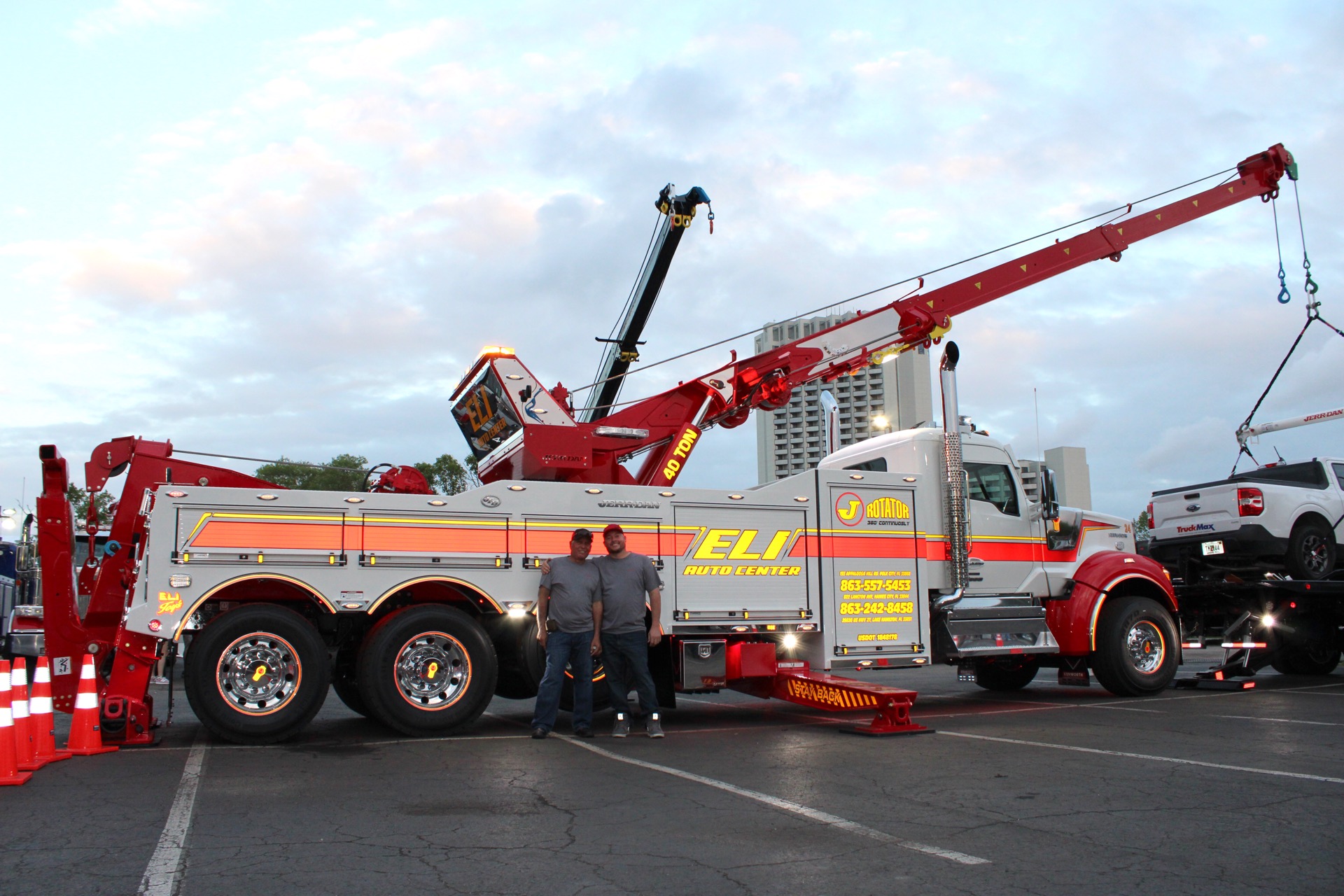
Those same considerations influenced the design of Jerr-Dan’s new JD35/40T Rotator. The rotator is built on a 7.4-million RBM high-strength torsion subframe paired with the company’s S130 outrigger system. Pivoting, ground-compacting spade feet and multi-position rear spades are designed to improve stability during side and rear recoveries and help operators work more effectively on uneven terrain and high-load situations.
The connection is straightforward: Recovery planning begins with understanding the ground beneath the truck.
Decision 2: Match the Equipment to the Recovery
Perez believes another important decision is selecting equipment that fits the recovery, not simply bringing the largest truck available.
“You don’t always need the bigger truck,” he says. “But, you always need the right one.”
He returns repeatedly to the idea of capability in real-world conditions. Everything from uneven terrain and shifting loads to limited working space influences how a recovery should be approached. Understanding how a truck performs in those situations becomes just as important as its rated lifting capacity.
That thinking also shaped the development of the JD35/40T Rotator. Rather than replacing larger rotators, Jerr-Dan designed the truck to bridge the gap between traditional heavy-duty wreckers and the company’s largest recovery units by combining proven technologies with operator-focused updates.
The JD35/40T features a 37-ft boom with continuous 360-degree rotation, allowing operators to work across a wide range of recovery angles. Standard equipment includes dual 35,000-lb two-speed planetary winches, a 50,000-lb drag winch and compatibility with the company’s 500 Series underlift options, expanding the truck’s versatility across different towing and recovery applications.
For Perez, however, equipment capability always comes back to operator knowledge. “The size doesn’t matter,” he says. “Everything is about the truck’s capacity, the operator and the knowledge.”
Decision 3: Recognize That Recovery Requirements Continue to Change
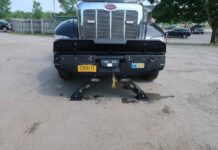
Recovery work today is different than it was just a few years ago. Commercial vehicles increasingly incorporate lower front bumpers, air dams and aerodynamic bodywork that can make underlift access more challenging during towing and recovery operations.
According to Jerr-Dan, those changes prompted the development of its new 350XLP and 500LP low-profile underlifts, designed to provide easier access beneath today’s commercial vehicles while maintaining heavy-duty capability. The low-profile designs are intended to help operators position the underlift beneath modern vehicles more easily while reducing the need for additional repositioning during recovery operations. Additional features, including a robust 5-inch crossbar, oversized pivot pin, floating mid-section and expanded fork selection, are designed to provide versatility across a wide range of towing applications.
The JD35/40T was also developed with flexibility in mind. The rotator supports Jerr-Dan’s 500 Series underlift options, including the new 500LP and UL565 coach boom, extending the range of vehicles that can be handled.
As vehicle designs continue to evolve, operators are increasingly balancing lifting requirements with changing vehicle configurations and recovery conditions.
Decision 4: Never Stop Learning
Perez believes experience remains one of the most valuable tools on any recovery. He has seen operators attempt to duplicate recoveries they have observed without fully understanding why those techniques worked.
“They see something and try to do it,” he says. “But, they don’t understand why.”
At Eli Towing & Transport, training takes place in classrooms, controlled environments and in the field. Operators are expected to understand how weight transfers, how equipment responds under load and where potential failure points exist, not simply how to complete a task.
Jerr-Dan’s operator-focused updates to the JD35/40T reflect a similar emphasis on helping operators work confidently in the field. The truck includes audible alarms for boom rotation and platform leveling, an operational load chart to help operators understand performance throughout the working envelope, proportional electrohydraulic controls, a wireless belly-pack remote and distributed hydraulic and electrical systems designed to improve serviceability and troubleshooting.
More Than Lifting
Every recovery presents different challenges, and no two scenes are exactly alike. The experiences of Eli Perez Sr. illustrate that successful recoveries often begin with careful planning, selecting equipment appropriate for the job and continuing to develop operator knowledge through training and experience. At the same time, equipment manufacturers continue refining heavy-duty recovery equipment to address changing recovery environments, evolving commercial vehicle designs and operator needs.
Whether the job involves positioning a rotator on unstable ground, accessing a modern commercial vehicle with lower front-end components or selecting equipment for a complex recovery, one principle remains consistent: successful recoveries are shaped by the decisions made long before the first lift begins.